To become an Amazon bestseller, choose up to three accurate categories where the top books sell at a level you can match, then concentrate as many paid sales as possible into one launch day. Do that with an email list, a coordinated launch team, partners who promote on the same day, and early honest reviews. Category bestseller status is achievable. Topping the overall chart is far harder.
Key takeaways
- An Amazon 'bestseller' usually means #1 in a category, not the whole store. Be honest about which one you mean.
- Best Sellers Rank weighs recent sales most heavily, so concentrate sales into a short window.
- Pick up to three accurate categories, and check how well the current #1 sells before you choose.
- Launch teams shrink. Of 100 people who signed up for mine, about 10 took part.
- Never pay for positive reviews. Ask for honest ones and disclose any connection.
On 1 August 2012, I set myself a goal: be a bestselling author by the end of November.
Then I procrastinated for three weeks.
Then I thought I'd better do something about it...and procrastinated for another few weeks.
I only got serious about the outline in mid-September. From there I went into overdrive. I wrote the book, had it edited, formatted and published on Amazon in two months. It was called Email Marketing That Sells, and it made the bestseller list. Later I did it again with Feed a Starving Crowd.
No book tour. No expensive PR. Just a launch plan, a list and a few people willing to help.
I later used the same approach, bigger and better organized, for other authors' books and my own. Here's what I learned, updated for how Amazon works in 2026.
What does "Amazon bestseller" actually mean?
Let's be honest about this first.
Amazon ranks every book with a Best Sellers Rank, and also ranks it in up to three bestseller categories. When an author says they're an "Amazon #1 bestseller," they almost always mean #1 in a category, not #1 in the whole store.
A few things Amazon's KDP help pages say about how this works, as at October 2026:
- Ranks are relative. Your rank can move even if your sales don't, because other books are selling too.
- Recent sales count more heavily than older sales.
- Each format (ebook, paperback, hardcover, audiobook) has its own rank, but the Books bestseller lists combine all formats of a title into one rank per category.
- Kindle rankings are split into Free and Paid lists, and free promotion periods don't count toward Paid rankings.
- Ranks refresh at least once a day, and changes can take up to two days to show.
The second point is the whole strategy. Concentrate your paid sales into a short window, and you'll rank far higher than the same number of sales spread over a month.
How my first book got onto the list
Four things did most of the work:
- Two weeks of hype before launch, warming up my email list (the same pre-launch idea I cover in unusual product launches).
- Multiple promotions to the list on launch day and the days after.
- Facebook ads, plus a Facebook "offer" that more than 150 people claimed, which spread into their friends' news feeds.
- A launch team who promoted the book to their own networks.
And one thing nearly ruined it.
How do you choose Amazon categories?
At 5pm on the Friday before launch, I realized we were in the wrong Kindle categories.
Sigh.
All the research we'd done into the right categories was about to be wasted. I changed them and held my breath, because the message said the update could take up to twelve hours. Thankfully, Amazon updated them almost immediately.
My lesson then still applies: categories for the physical book and the Kindle edition don't always match, so check every format.
In 2026, KDP lets you choose up to three categories when you set up a book, and says category changes can take up to 72 hours. So set them at least a week before launch.
How to pick:
- Accurate first. KDP says it may remove categories that don't match the content, and readers in the wrong category won't buy.
- Check the competition. Open the category's top 100. Click the #1 book and look at its overall rank. That tells you how hard the category is to top right now.
- Mix difficulty. One category you can realistically win, one stretch, one broad.
What is a book launch team?
I learned this idea from Michael Hyatt, author of Platform. You invite people to read an advance copy of your book, in return for an honest review and a promotion to their friends on launch day.
It's a great idea. But don't take your launch team for granted.
More than 100 people signed up for mine. About ten actually helped. I don't blame the other ninety. They had higher priorities than my book. But it was a massive lesson.
So when E-Web Marketing took on In Someone Else's Shoes, the memoir of Joseph Assaf, I did it differently.
How we took Joseph Assaf's book to #1 in marketing
Joseph migrated to Australia from Lebanon in 1967, aged 22, with no English, no money and no family. He went on to pioneer multicultural marketing and founded the Ethnic Business Awards. We converted his book for Kindle and ran the same playbook, but with 250 people on the launch team and a dedicated launch team manager who stayed in close contact with them. We also held a live "launch party" for key influencers. More than 130 people promoted the book on launch day. It became the #1 marketing book on Amazon.com and stayed #1 in marketing, global marketing and international marketing for several days.
The difference wasn't the size of the team. It was the management. Somebody owned it.
How do you get Amazon reviews?
Slowly, and honestly.
For my first book, my team compiled a list of the top 500 Amazon reviewers and approached every one. Three said yes. One actually wrote a review.
An easier way is to ask people who know you: business acquaintances, journalists, fellow authors. Reciprocity works best. Review another author's book before you ask them to review yours.
The rules have tightened since then, and that's a good thing:
- Don't pay for positive reviews. In the US, the FTC's 2024 rule bans incentives tied to writing positive or negative reviews, and undisclosed reviews from insiders.
- Disclose connections. If a reviewer got a free advance copy or knows you, they should say so.
- Ask for honesty, not stars. In Australia, the ACCC says reviews should be independent and reflect the genuine opinion of someone who experienced the product.
Tim Ferriss famously sent thousands of advance readers an "URGENT" email on launch day asking them to spend thirty seconds writing a review, and got about 200 in the first week. The 2026 version is the same idea with cleaner wording: thank them, remind them reviews help other readers decide, and ask for an honest opinion, with a disclosure line they can copy.
Ask the books
Ask any question about launching, marketing or turning a book into recurring revenue, and get answers drawn from both of Robert's books.
How James Altucher sold books by the truckload
James Altucher, author of Choose Yourself, shared his tactics with me for the book. Here they are with my 2026 notes:
| What James did | Result he reported | The 2026 version |
|---|---|---|
| A Reddit "Ask Me Anything" | Over a million views and 3,000 comments | Still works. Also go on video podcasts and YouTube interviews |
| Sixty podcasts, radio spots, talks and guest posts, booked by his PR team | Steady sales | A podcast tour is still the best-value book promotion I know |
| A SlideShare deck, promoted to the front page | 300,000 views | A LinkedIn document carousel of the book's big ideas |
| The first book pre-sold for Bitcoin | Press coverage | Find your own genuinely newsworthy angle |
| A money-back guarantee, even if bought from a retailer | Publicity, low refund risk | Still a strong trust signal for nonfiction |
| Foreign rights sold via an agency on commission | $10,000 he didn't have before | Same, plus audio rights |
| A bundle emailed by newsletter publisher Porter Stansberry | Over 20,000 packages sold | A partner bundle with a newsletter or membership in your niche |
That last one is a joint venture, and it was the biggest single win. One partner, one email, 20,000 sales.
James and Tim Ferriss also tested their book titles with ads before choosing them. James ran Facebook ads on ten possible titles and Choose Yourself won clearly. It's still the cheapest market research an author can do. See Facebook ads on a small budget.
How do you concentrate sales into one day?
My biggest regret about my first launch: sales were spread evenly over five days. I still made the list, but I'd have ranked much higher with the same sales in one day.
A one-day launch schedule
7am: Launch team gets "It's live" email with the link and a ready-to-post message. 8am: Email your list. 9am to 5pm: Partners send their emails at agreed times (stagger them so the rank keeps climbing). Midday: Post the story of the book on LinkedIn and your main social channel. 6pm: Second email to your list for anyone who missed the first. 9pm: Thank-you message to the launch team with a screenshot of the rank. Screenshot it with the date and category, because ranks move.
Is being an Amazon bestseller worth it?
Sometimes.
The label helps with speaking gigs, media and credibility. I'm proud that The Subscription Playbook became a bestseller, and it opens doors.
But a book that hits #1 in a small category for a day and then sells nothing hasn't done much. The real prize is what happens after: readers who join your email list, book a call, or sign up for your membership.
Patrick Snow, author of Creating Your Own Destiny, gave me two tips I still use. Make every chapter heading a lesson, because your table of contents is your sales page. (It's the same skill as writing headlines that sell.) And put calls to action throughout the book, sending readers to checklists and templates on your website. There's no point selling a million copies if you don't build a list.
That's why The Subscription Playbook sends readers to free tools and templates, and why this site gives the hardcover away to Australian business owners. The book is the front door of the business, not the business.
When is chasing the bestseller list the wrong goal?
When it costs more than it earns. Paying for a burst of sales just to use the label rarely pays back.
When the book isn't ready. Hype for a weak book creates bad reviews that stay forever.
And when you'd get more from fewer, better readers. A book that sells 2,000 copies to exactly the right business owners can be worth more than a bestseller nobody acts on.
What to do next
- Choose your three categories and check how hard each #1 is to beat.
- Recruit a launch team two to three times bigger than you need, and appoint a launch manager.
- Line up two or three partners to email on launch day.
- Write your launch-day schedule, hour by hour.
- Put calls to action in the book that bring readers back to your list.
Then read my full book launch strategy, which covers pre-orders, podcasts, bookstores and the twelve weeks before launch day.
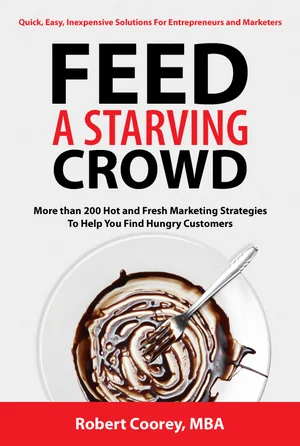
Get Feed a Starving Crowd free
Robert's first book: more than 200 low-cost marketing strategies to find hungry customers. Free PDF and ePub.
Download it freeFrequently asked questions
How many sales does it take to become an Amazon bestseller?
There's no fixed number, because Best Sellers Rank compares your book with everything else selling at the same time. In a small, quiet category, a modest burst of sales in a day can reach #1. In a big category like business or self-help, it can take many times more. Look at the current #1 book's overall rank in your category before you launch, and watch it for a week.
Do free Kindle downloads count toward bestseller rankings?
Not toward the paid lists. Amazon splits Kindle rankings into Free and Paid lists, and KDP says free promotion periods don't count toward Paid rankings. A free promotion can still help you collect reviews and readers, but if 'bestseller' is your goal, you need paid sales, even at a low launch price.
Is it worth paying for a bestseller campaign service?
Be careful. Some services simply buy a short burst of sales in an obscure category so you can use the label. That's legal in itself, but readers and the media increasingly see through it. Spend money instead on things that keep selling: a better cover and title, partner promotions, podcast appearances and ads to a page that captures emails.
Can I call myself a bestselling author if I was #1 in one category?
Many authors do, but be precise. 'Amazon #1 bestseller in Email Marketing' is accurate. 'Bestselling author' on its own may imply more than you achieved. Under Australian Consumer Law, claims in your marketing can't be misleading, so keep a screenshot with the date, category and marketplace.
Should I launch the ebook, paperback and audiobook at the same time?
Usually, yes, if you can. Amazon's Books bestseller lists combine all formats of a title into one rank per category, so sales across formats help each other. It also lets each buyer pick their preferred format on launch day. If you can only manage one, launch the ebook at a low price and add the other formats soon after.

Get both books free
The Subscription Playbook (ebook + audiobook) and Feed a Starving Crowd, instantly. In Australia? Claim the free hardcover.

Robert Coorey, MBA
Robert is the author of The Subscription Playbook and Feed a Starving Crowd and a Director at BPAG Accountants in Sydney. More about Robert.
Sources
- Amazon KDP Help, Choosing categories
- Amazon KDP Help, Sales ranking
- FTC, Federal Trade Commission announces final rule banning fake reviews and testimonials (14 Aug 2024)
- ACCC, Social media promotions (fake reviews)
Facts and prices checked 27 October 2026. Spotted something out of date? Tell us.