A strong product launch strategy has four parts: prove demand before you build (ideally by pre-selling), warm up an audience with useful content that leads to the offer, concentrate attention into a short launch window with real scarcity, and line up partners to promote at the same time. For subscriptions, plan what happens after launch week, because retention is where the money is.
Key takeaways
- Pre-sell before you build. The Foundation found the problem, sold the solution, then built it.
- A launch sequence of useful content beats a single 'we're live' announcement.
- Rename tired formats. Mindvalley's webinar became an 'energy clearing session' and 10,000 people showed up.
- Tell your payment provider before launch day. A frozen merchant account can sink a good launch.
- For subscriptions, the launch is the start. Founding-member cohorts need onboarding, not just a welcome email.
Kerwin Rae's national seminar tour was advertised everywhere.
Every major TV station. Every major radio network. Taxis. Billboards on the way to and from the airport. Full-page newspaper ads.
And not one of those ads was paid for with cash.
Kerwin, an Australian sales and business trainer, filled 5,500 paid seats across four cities that way, more than doubling his previous result. When I interviewed him for Feed a Starving Crowd, the full breakdown was too long to print, but the principle was simple: he traded what he had for the advertising he needed.
That's the theme of this page. The best launches I've studied didn't win by outspending anyone. They won by doing something different.
What is a product launch strategy?
It's your plan for turning a new product from "nobody knows" to "people are buying" in a short, concentrated window.
A good one answers four questions:
- Do people want this? (Prove demand before you build.)
- Who will hear about it? (Your list, partners, media, communities.)
- Why buy now? (Real scarcity and a reason to act.)
- What happens after launch week? (Especially for subscriptions.)
Here are seven launches that answered those questions in unusual ways.
1. How Mindvalley built a $1 million launch from three videos
Mindvalley is one of the world's most practiced launchers of information products. For the book, I tracked down Ewa Wysocka, who ran its launches.
Before Mindvalley launches anything, it does market analysis: search volumes, how competitive the keywords are, and who's already advertising and how well. It also splits products into front end (things lots of people already search for, so customers are easy to acquire) and back end (things people don't search for but want once they're shown in the right light). Pull marketing, then push marketing.
The launch of Christie Marie Sheldon's Unlimited Abundance course generated more than $1 million. It went to Mindvalley's own list first, then to affiliates, through three pieces of content:
- A paradigm shift. A video called "Are You a Lauren or a Diane?" contrasted two women, one with 24 money mindset blocks and one without. Most viewers saw themselves in the first one.
- Behind the scenes. A live coaching session with a real client, to prove Christie could deliver.
- Results in advance. A live "energy clearing session" called "Unblocking Your Abundance."
That third one was brilliant. It was a webinar. They just didn't call it that, because the market was sick of webinars. 30,000 people registered and 10,000 showed up. Mindvalley sold out the first 200 spots, released another 200, and sold those too.
Every launch page was built to be shared, and Ewa found 30% of traffic, sign-ups and sales came from social shares.
Steal this: rename the tired format
If your market is sick of "webinars," call it an online seminar, a workshop, a live clinic or a masterclass. If it's sick of "free trials," call it a test drive. The format can stay the same. The name has to feel new to the people you're inviting.
2. How The Foundation pre-sold software before it was built
Dane Maxwell's The Foundation taught would-be software entrepreneurs to do things in the opposite order to most developers: find a problem customers have, pre-sell the solution, then build it. Twelve months after the idea, its launch did $1 million.
I interviewed Dane's business partner Andy Drish. Three things stood out:
- Relationships. An interview on Mixergy, a site for entrepreneurs, snowballed into others. Andy said about 80% of their marketing was asking top blogs and business sites to interview them, and their students' stories turned out to be even more persuasive than Dane's.
- Obsessive scripting. They spent a hundred hours on the script for one eight-minute video. One would read it aloud to potential customers while the other watched for the moment people lost interest, then they'd rewrite that part. Result: a 40% opt-in rate.
- A six-video sequence. Five videos packed with content, then one sales video.
Pre-selling is also the cheapest product/market fit test there is. If nobody will pay before it exists, they probably won't pay after.
3. The launch-day disaster you can prevent
The Foundation's launch day was a mess. Their merchant account cut their transaction limit on launch day. Andy had to switch providers, and even then they couldn't access the funds for more than six months.
In 2026 this still happens. Payment providers can lower limits, hold funds or add reserves when volume spikes suddenly, because a spike can look like fraud.
So before launch:
- Tell your payment provider your expected volume and dates.
- Make sure your refund policy and terms are on your site.
- Test the full checkout, including the receipt and welcome email.
Check you've got product/market fit first
Run the free Sean Ellis survey on your beta users and score it before you spend on a launch.
4. How Roses Only got 150,000 people to carry its ads
Roses Only became one of Australia's best-known flower brands. A Nielsen study found that when consumers were asked to name a flower company, 93% said Roses Only.
Most of that came from traditional advertising. But CEO James Stevens told me about two unusual strategies:
Contra sponsorship of charities. Charities spend thousands on flowers to thank volunteers and guests at events. Roses Only provided them free in exchange for mentions, and its flowers ended up in the hands of exactly the people it wanted as customers.
Branded umbrellas sold below cost. Roses Only sold high-quality umbrellas for $19.95 when they cost $22. Over eighteen years it sold 150,000 of them. Every time it rained in Sydney, thousands of people walked around holding a Roses Only ad. As volumes grew, the cost price came down and the margins improved.
What could you subsidize that your customers would carry, wear or use in public?
5. How one email campaign went viral inside offices
Tzvi Balbin, who had run online marketing at CatchOfTheDay, shared this one.
He noticed that a big slice of a client's email list used work addresses at large companies and small businesses. So he created a "company" field from each email domain and sent every company its own coupon code, in the subject line and the email. Picture someone at a big bank leaning over the cubicle: "Did you get the discount for our company?"
Against the client's usual results, opens rose 32%, click-throughs 55%, average order value 13% and conversion rates 86%. And when he compared the database with Google Analytics, total revenue was about 35% higher than analytics reported. That gap was the people who never got the email but heard about it from a colleague.
In 2026 you can still do this, with one condition: only email people who've agreed to hear from you. Australia's Spam Act requires consent, clear identification and a working unsubscribe.
6. How a landscaper got 100 quotes for under $4,000
Media buyer Ben Simkin worked with Nick, a Sydney landscape designer. Nick's clients were mostly successful business owners, but it was nearly always their partner who asked for the quote, and those partners loved fashion.
So instead of competing on crowded home and garden sites, Ben found three fashion blogs that could target Sydney readers, negotiated directly with the owners, and offered a free guide to the top ten garden designs in Sydney. Emails followed, with an offer of a free design consultation.
Nick got 100 quote requests over four months for less than $4,000 in advertising.
Launch where your competitors aren't looking.
7. How subscription launches are different
Every launch above was built to make a sale. A subscription launch has a second job: keep the people who joined.
So launch with a founding-member cohort, not just a crowd:
| Launch element | One-off product | Subscription |
|---|---|---|
| Offer | Launch discount | Founding-member price that stays while they stay |
| Scarcity | Limited stock or a deadline | Limited founding spots you can actually onboard well |
| Success measure | Launch-week revenue | Members still active after 90 days |
| After launch | Next product | Onboarding, first win, feedback, referrals |
Keep the scarcity real. Mindvalley released 200 spots because it could coach 200 people. If you set a limit, stick to it. My guide to scarcity without being slimy explains why fake scarcity backfires, and the ACCC treats misleading claims about limits and deadlines seriously.
If you're launching in Australia, also build your sign-up and cancellation flow for the subscription rules that start on 1 July 2027. Launch week is the worst time to redesign checkout.
When is a big launch the wrong strategy?
When you haven't tested demand. A launch is an amplifier. It makes a good offer louder and a bad one louder too.
When you can't deliver at volume. A sold-out launch followed by slow delivery creates refunds and bad reviews.
When your product sells best through steady word of mouth, like most local services. A permanent referral system may beat a launch spike. See referral programs for subscription businesses.
What to do next
- Pre-sell to ten people before you build anything.
- Plan three pieces of launch content: a shift in thinking, proof, and results in advance.
- Line up two or three joint venture partners to promote in the same week.
- Tell your payment provider and test your checkout.
- Decide what a successful launch looks like 90 days later, not just on day one.
No list, no budget and no product yet? Start with unusual ways to launch fast and cheap or crowdfund your first run.
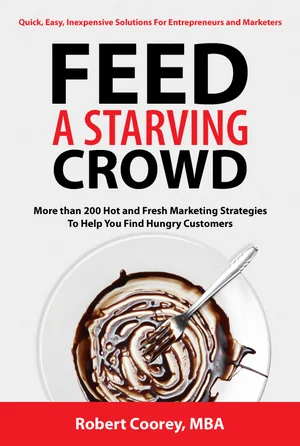
Get Feed a Starving Crowd free
Robert's first book: more than 200 low-cost marketing strategies to find hungry customers. Free PDF and ePub.
Download it freeFrequently asked questions
How far in advance should I plan a product launch?
For a small business, six to eight weeks is a good minimum. Use the first few weeks to confirm demand and build a waitlist, the middle weeks to publish launch content and line up partners, and the final week for the launch window itself. Bigger launches with affiliates or retail partners often need three months or more, because partners book their promotions well ahead.
Should I launch on Product Hunt?
If your buyers are tech-savvy early adopters, such as software, AI tools, developer products or productivity apps, it's worth doing, mainly for early users, feedback and backlinks. Prepare a short demo video, clear screenshots and an offer for the community, and rally your own supporters. For a local service or consumer product, your energy is usually better spent on your own list, partners and local media.
What's the difference between a soft launch and a hard launch?
A soft launch opens quietly to a small group, such as a waitlist or existing customers, so you can fix problems before the public sees them. A hard launch is a coordinated public push in a short window. Most good launches do both: soft launch to learn and collect testimonials, then hard launch with proof in hand.
How do I launch with no email list?
Borrow someone else's audience. Partner with a business that already serves your customers, guest on podcasts, post useful content in communities where your customers gather, or run a small ad test to a waitlist page. You also have more of a list than you think: past customers, phone contacts, LinkedIn connections and your social followers all count.
Is launch scarcity ethical?
It is when it's real. Limited spots because you can only onboard 200 people, a founding price that genuinely ends, or a bonus that's only available in launch week are all fine. Fake countdown timers that reset, or 'only 3 left' when there are 3,000, mislead customers and can breach consumer law. Set a real limit and stick to it.

Get both books free
The Subscription Playbook (ebook + audiobook) and Feed a Starving Crowd, instantly. In Australia? Claim the free hardcover.

Robert Coorey, MBA
Robert is the author of The Subscription Playbook and Feed a Starving Crowd and a Director at BPAG Accountants in Sydney. More about Robert.
Sources
- ACCC, False or misleading claims
- Competition and Consumer Amendment (Unfair Trading Practices) Act 2026, Federal Register of Legislation
Facts and prices checked 27 October 2026. Spotted something out of date? Tell us.