To launch a product with no budget, build a list from contacts you already have (LinkedIn, phone, past customers), borrow an audience through a partner's newsletter or community, and invite everyone to a free live session that teaches for most of the time and makes one clear offer at the end. Pre-sell before you build, then use the revenue to fund the next launch.
Key takeaways
- You already have a list: LinkedIn connections, phone contacts, past customers, business cards and group members.
- The bare-bones launch: free live session, 55 minutes of value, a five-minute offer, then build what people paid for.
- Try lots of cheap things at once. Some will fail. Keep the ones that ring the bell.
- For a subscription, a founding-member offer pre-sells the product and funds the build.
- An owned audience outlasts everything else. Click Frenzy's subscriber list was still a prized asset when the business changed hands in 2026.
When I joined E-Web Marketing, my first assignment was to fill two seminars. One in Sydney, one in Melbourne. Each room held 200 people. Tickets were $47.
So far, two people had registered for Melbourne. Ten for Sydney.
Gulp.
The CEO, Gary Ng, asked whether I could fill the rooms.
"Of course," I said.
Five minutes later, I realized what I'd signed up for. Melbourne was ten days away.
I went back to Gary and suggested we cancel Melbourne and focus on Sydney. Gary wasn't having it. Melbourne was already paid for, and it was the test that would help us get Sydney right. "If we give up in Melbourne, we're saying failure is okay. Do whatever you need to fill the room."
So I did what Frank Pacetta did when he turned around the worst-performing Xerox district in his book Don't Fire Them, Fire Them Up. I raised expectations and set up a bell. Every time someone registered, I got an email alert, and the bell was rung. No exceptions.
Then I asked: what are all the cheap, fast, easy ways to get people registered?
- We emailed our customer list (mostly Sydney, but maybe they had friends in Melbourne).
- All forty staff posted on Facebook and LinkedIn at the same time.
- I found an affiliate broker who let us email its business database.
- A friend at a popular business blog wrote an article about the event.
Many of those failed. The blog sent no traffic. The social posts were marginal. But the other tactics worked, and we filled the rooms.
The website wasn't pretty. Payments went through PayPal and we cross-checked registrations by hand. The analytics tracking was playing up.
But the rooms were full.
That's the message of this guide. The way you launch matters less than the mindset: try lots of cheap things fast, keep what works, and don't cancel Melbourne.
How do you launch a product with no budget, no list and no product?
I've been there. Here's the bare-bones launch I've used. It won't be a million-dollar launch. But it will make some revenue, prove the idea works, and give you money to reinvest.
I used it to test whether people would buy our training videos as an online course.
Step 1: Build a list from what you already have
"I don't have a list" is the most common excuse I hear.
You do have a list. In fact, you have lots of them:
- LinkedIn connections (you can export them)
- Mobile phone contacts
- Your email address book
- Past and current customers
- Business cards in your drawer
- Facebook friends, Instagram followers and WhatsApp groups
- Members of groups and associations you belong to
Approach each one differently. It's fine to email personal contacts once to tell them what you're up to. Any more than that gets annoying.
Step 2: Borrow someone else's audience
I secured the right to email an affiliate's database. In 2026, the same idea shows up as a newsletter sponsorship or swap, a guest spot on a podcast, a co-hosted session with a business that serves the same customers, or a post in a community where the owner introduces you. My guide to affiliates, JVs and partners goes deep on this.
Step 3: Run a free live session with one clear offer
I emailed both lists an invitation to a free webinar. Fifty-five minutes of genuinely useful content, then a five-minute offer.
The offer was a five-week online course with five live sessions and Q&A, plus access to future training videos, for $997.
Five hundred people attended. Eight bought.
Not the best conversion rate in the world. Not the worst either. Total revenue was $7,976 for about forty hours of work, including delivering the course. That's roughly $199 an hour, and I recorded all five sessions so I could use them as bonuses in later launches.
Since then I've run dozens of webinars. For one client, 8,000 people registered and the server crashed. (Some would call that a high-quality problem.)
Steal this: the 2026 bare-bones launch kit
A free video call or live-stream tool. A one-page sign-up form. A simple payment link. A calendar invite with a reminder. A fill-in-the-blanks workbook sent 48 hours before the session (it lifts attendance because people need to turn up to fill it in). That's it. Everything else can wait until somebody pays.
How did two young tipsters make $100,000 from Facebook posts?
This is one of my favorite launch stories.
Jared Hopping (23) and Brett Cosgriff (25) were uncannily good at tipping sporting results. They once picked the most valuable player of the AFL grand final a full two weeks before the game. They set up a Facebook page and got 9,000 likes in two weeks.
They teamed up with entrepreneurs Nathan Rothschild and Jonathan Weinstock and created a business called MVP Genius.
For two weeks before launch, they posted great tips and built the hype. Then they pressed "go" and held their breath.
In the first forty-five minutes, they sold seventeen annual packages at $699 each. They hit $50,000 in two days and $100,000 by the end of the launch.
Their first website was awful. It didn't matter. They were selling something a crowd was starving for.
Notice what they sold, too: an annual package. That's a subscription paid upfront. If you're launching a membership, an annual founding offer gives you cash to build with. (I cover the trade-offs in annual vs monthly plans.)
The 2026 version: the platform has changed, not the play. Build a free audience on the channel your crowd uses most (short video, LinkedIn, a newsletter, a community), give away your best stuff for a few weeks, then open the doors for a limited founding group.
What happened to Click Frenzy, Australia's PR launch legend?
In the book I told the story of Click Frenzy, Australia's answer to Cyber Monday. Its first 24-hour online sale, on 20 November 2012, drew 2.6 million visits and 22 million page views without paid advertising.
It was a PR launch. Channel Nine's A Current Affair got an exclusive sneak peek at the deals. Newspapers got their own exclusive deals. A growing media list got regular press releases. Media Monitors counted more than 900 mentions.
Then the site crashed under the load, and social media turned on it. A lesson in being ready for success.
Here's the update for 2026. According to SmartCompany, Click Frenzy and its sister business went into liquidation in April 2026. Within weeks, Catch co-founders Gabby and Hezi Leibovich bought the business and its digital assets, including a subscriber base of more than 1.5 million email addresses and phone numbers. They relaunched it with an end-of-financial-year sale from 18 June 2026, with Australia Post sponsoring free registration for the first 500 retailers.
My take
The company went under, but the list survived and was valuable enough for experienced e-commerce founders to buy. That's the real lesson of every launch in this guide. Ads stop, platforms change their rules, PR fades. An audience that has said "yes, contact me" is the asset that lasts. Build yours with every launch.
How do you pre-sell a subscription before you build it?
A subscription gives you a launch advantage: you can sell membership before the full product exists, as long as you're honest about what people get and when.
Here's a founding-member structure I like:
- A limited founding group. Say, the first fifty members. A real limit, because you can only support so many people personally at the start.
- A founding price, locked in. Lower than the future price, and guaranteed for as long as they stay.
- Something they help shape. A monthly call where founders vote on what you build next.
- A clear start date and what they receive from day one.
Worked example: a founding membership for a business coach (illustrative)
A coach plans a group membership at $149 a month. She offers fifty founding places at $99 a month, or $990 a year paid upfront. Thirty people join: twelve pay annually ($11,880 upfront) and eighteen pay monthly ($1,782 a month). She has nearly $12,000 in the bank before the first session and $1,782 a month recurring. Even if half the monthly members leave in the first year, the annual payments have funded her content, platform and first ads. Run your own numbers with the subscription price calculator.
An Australian note. Under the Australian Consumer Law, you must not accept payment if you don't intend to supply, or won't be able to supply within the time you said (or a reasonable time). That's the "wrongly accepting payment" rule in section 36 of the ACL, and business.gov.au has a plain-English overview of the Australian Consumer Law. Set realistic dates and refund quickly if plans change. My guide to the Australian Consumer Law and subscriptions has more, and if you're unsure, get advice.
Price your founding-member offer
Work out a launch price that still makes a profit after costs, GST and fees.
Launching on a shoestring in 2026: old tactics and their modern equivalents
| In the book (2013/14) | What I'd use in 2026 |
|---|---|
| Webinar platform invite to your email list | A live session on Zoom, LinkedIn Live or YouTube Live, plus the replay |
| Blasting an affiliate's email database | A newsletter swap or sponsorship, a podcast guest spot, a co-hosted session |
| Facebook page posts and likes | Short video, LinkedIn posts, Reddit and niche communities, creator partners |
| Press releases to a media list | Exclusive story to one journalist, podcast tour, a Product Hunt launch for software |
| Staff blasting Facebook and LinkedIn | Staff and customers sharing, with a referral reward for sign-ups |
| "Coming soon" page | A waitlist page with a founding offer (see landing pages that convert) |
When is "fast and cheap" the wrong choice?
Fast and cheap is perfect for testing ideas, services, courses, memberships and software. It's the wrong choice when:
- Safety or regulation is involved. Food, health, financial products and anything physical that could hurt someone need proper testing and compliance first.
- Your buyers expect polish. Enterprise buyers and some premium consumer brands judge you on presentation. A scrappy launch can cost you the deal.
- You can't handle success. Click Frenzy's crash is the classic example. If you might get a flood, make sure your systems, stock and support can cope.
- Your reputation is the product. If you're an established firm, a sloppy launch can damage trust you've spent years building. Test with a small, private group first.
What to do next
- Write down five product or offer ideas you'd like to test.
- Build a list of at least 200 people from your contacts, customers and groups.
- Find one partner who already serves your customers and ask them to co-host or mention you.
- Book a free live session three weeks from today. Teach for 55 minutes. Make one offer.
- Set up your bell. Celebrate every sale with your team.
When you're ready for something bigger, read my guide to unusual product launches. If you want people to act before the doors close, read scarcity without being slimy. And if you're starting a subscription from nothing, see starting a subscription business with no money.
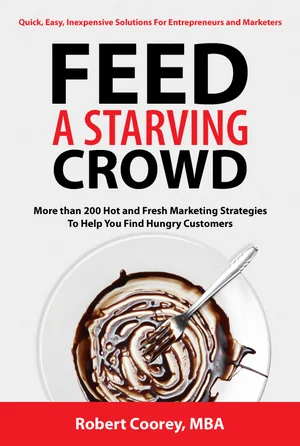
Get Feed a Starving Crowd free
Robert's first book: more than 200 low-cost marketing strategies to find hungry customers. Free PDF and ePub.
Download it freeFrequently asked questions
Can you launch a product with literally zero dollars?
Almost. Your time is the main cost. A free video call tool, a simple payment link and a one-page sign-up form will get you started for little or nothing. Where people get stuck is reach, not tools. That's why the first job is building a list from contacts you already have and borrowing audiences from partners who already serve your customers.
How long should a product launch take?
A bare-bones launch can run in two to three weeks: one week to build the list and invitation, one to promote the live session, and a few days of follow-up afterward. Bigger launches with video series, partners and prizes often run four to eight weeks of promotion. Start small, learn what works, then scale the next one.
Is it legal to sell something before it exists?
Pre-selling is common, but in Australia you must not accept payment if you don't intend to supply, or can't supply within the time you promised or a reasonable time. Be clear about what buyers get and when, keep records, and refund promptly if you can't deliver. This is general information, so get advice for your situation.
What's the cheapest launch channel in 2026?
For most small businesses, your own network plus one partner. Personal messages to past customers and LinkedIn connections, one post in each group where your customers gather, and a partner who mentions you to their newsletter or community will usually beat a small ad budget for a first launch. Ads become useful once you know your offer converts.
Should I launch with a discount?
Use a reason, not just a discount. A founding-member price for the first group, an early bird window or a bonus for live attendees all reward people for acting early and helping you test. Be clear about how long the price lasts and what happens after. Don't invent deadlines you won't keep.

Get both books free
The Subscription Playbook (ebook + audiobook) and Feed a Starving Crowd, instantly. In Australia? Claim the free hardcover.

Robert Coorey, MBA
Robert is the author of The Subscription Playbook and Feed a Starving Crowd and a Director at BPAG Accountants in Sydney. More about Robert.
Sources
- Robert Coorey, Feed a Starving Crowd, Chapter 2 (2013/14)
- SmartCompany, Click Frenzy returns in June 2026 with free registration for 500 retailers
- Internet Retailing, Catch founders bring Click Frenzy back to market (2 Jun 2026)
- business.gov.au, Australian Consumer Law and your business
Facts and prices checked 27 October 2026. Spotted something out of date? Tell us.