To start a subscription business with little or no money, choose a service or product you can deliver yourself, pre-sell it to founding members before you build anything, use a template website and a payment platform with recurring billing, and win your first customers through communities, referrals, partnerships and content rather than ads. Reinvest early subscription revenue to grow.
Key takeaways
- Sell before you build. Founding members fund the first version.
- Start with what you can deliver yourself: a service, a skill or a product you can source in small batches.
- Don't spend thousands on a website. A template on Wix, Webflow, WordPress or Shopify is enough.
- Do the work yourself at first: content, video, onboarding. That authenticity sells.
- You don't need money to start. You will need it to scale, so plan how early revenue funds growth.
Nine months.
That's how long Patrick Campbell gave himself to see whether this "being an entrepreneur" thing could work.
He'd spent time at Google, and he had an idea: help businesses work out what to charge. He called it Price Intelligently. He didn't have a marketing budget, so he did everything himself. Eighteen-hour days. Writing posts. Shooting videos. Telling his story to anyone who'd listen.
A tech journalist at The Boston Globe found one of his posts and ran with it.
That exposure led to clients. The clients led to a second idea: subscription metrics. ProfitWell gave businesses their metrics free and charged for the tools that improved them. In May 2022, Paddle bought ProfitWell in a deal valued at more than $200 million.
I end The Subscription Playbook with stories like Patrick's for a reason. Most readers don't have millions to invest. And I want to be clear: you don't need it to start.
Can you really start a subscription business with no money?
Yes. But let me be straight with you about what that means.
You can start a subscription business with almost no money. You'll need money to scale it: stock, staff, software, marketing. The trick is to start in a way that lets your first subscribers fund the next step.
That rules out some ideas at the beginning. A car subscription or a hardware product with an app? Not on a shoestring. A monthly coaching program, a maintenance plan, a curated box you assemble at your kitchen table, a members' community? Absolutely.
Four bootstrapper stories (and the lesson from each)
1. The Food Boss Academy: start small
Lauryn, the founder, built her business from her own life. Studying and working full-time, she put on weight, and a doctor told her she had high blood pressure. Her journey to better health led to The Food Boss Academy: monthly video modules, weekly live training sessions, regular access to her for questions and monthly group coaching. She built it without spending thousands of dollars.
The lesson: start with a proof of concept and an introductory offer, delight your first few clients and build at your own pace. (Since the book, the Food Boss Academy website has redirected to Lauryn's own coaching site, which now focuses on a more specific audience and outcome. Narrowing the niche is a common path for solo subscriptions.)
2. Kogan: you don't have to start with a subscription
Ruslan Kogan's parents arrived in Australia with $90 in their pockets. He started kogan.com in their garage at 23, selling consumer electronics below typical store prices. The subscription came much later: Kogan First, a paid membership with free shipping and member deals.
In fiscal 2026 Kogan's paid loyalty programs earned A$61.4 million.
The lesson: if cash is tight, one-off sales can fund the subscription you add later. Read how Kogan First grew into a $61 million loyalty engine.
3. Patrick Campbell: do the work yourself
Patrick didn't hire a marketing agency. He wrote, filmed and published himself, and that authenticity is what the journalist connected with. Nobody can promise a newspaper will pick up your posts. But the content you create may land your first clients, and their revenue funds everything else. Read how ProfitWell's free-first strategy became a $200 million exit.
4. Dollar Shave Club: use the talent you already have
Michael Dubin had lost his job and had a vague idea about comedy. A friend had 250,000 razors in a warehouse. Michael filmed a funny video, and the launch sold that stock in a day.
The lesson: if you can write, write. If you're good on camera, film. Your hidden talent might be your marketing budget.
The update is a warning, though. Unilever paid $1 billion for Dollar Shave Club in 2016 and sold a majority stake to private equity in 2023. A great launch gets you started. It doesn't protect you from copycats. You'll need a moat too.
The $0 to $500 subscription launch plan
Here's the plan I'd follow if I had to start a subscription business tomorrow with almost no money.
1. Pick something you can deliver yourself
A skill, a service or a product you can source in small batches. Not sure what? Look for a hungry niche first. Read how to find a niche market.
Starving Crowd Niche FinderScore niche ideas the Feed a Starving Crowd way.Open the free tool →2. Sell founding memberships before you build
Offer a limited number of founding memberships at a special price, in exchange for patience and feedback. Make sure "limited" really is limited. Founding members fund the first version and tell you what to build.
Funding the launch with founding members (illustrative)
You plan a A$99-a-month members' program. You offer 20 founding places: monthly at A$79 for life, or A$790 for a year upfront (two months free).
Say 12 choose monthly and 8 choose annual.
- Monthly: 12 × A$79 = A$948 a month in recurring revenue.
- Annual: 8 × A$790 = A$6,320 in cash on day one.
That's enough to pay for a year of tools and your first batch of materials before you've spent a dollar of your own. (If you're registered for GST, remember 1/11th of those amounts is GST.)
3. Use a template website
The book's advice still stands. Don't spend thousands on a website. Use Wix, Webflow or WordPress with a free template, or Shopify if you're selling products. Your customers won't care that it's templated, as long as the subscription gives them what they want.
4. Take recurring payments properly
Use a payment platform with built-in subscription billing, failed-payment retries and receipts. Write simple terms: price, billing date, renewal, how to cancel. Make canceling easy. In Australia that becomes a legal requirement from 1 July 2027, and it's good practice now.
5. Deliver manually at first
Hand-pack the box. Run the coaching call yourself. Send the onboarding emails personally. You'll learn exactly what customers value before you automate anything.
6. Win customers without ads
The four techniques from Chapter Eight of the book cost little or nothing: community marketing, webinars, referral programs and partnerships with associated businesses. In 2026 I'd add LinkedIn posts, short videos, newsletters, podcast guest spots and answering questions in the communities where your customers hang out. More in grow subscribers on a shoestring and launch fast and cheap.
7. Reinvest, in this order
Your first spare dollars go to whatever removes your biggest bottleneck: usually delivery (so you can serve more people), then retention (so they stay), then acquisition (so more arrive).
Get a launch plan for your idea
The free AI Subscription Playbook Generator turns the book's strategies into a step-by-step plan for your business, budget and market.
What to spend on, and what to skip
| Spend on | Skip (for now) |
|---|---|
| A payment platform with recurring billing | A custom-built website |
| A simple email tool | Paid advertising before you've proven people will pay |
| Small batches of stock, if any | Big minimum orders |
| Accounting software that handles GST | An office |
| Your own time talking to customers | Expensive branding agencies |
| Basic advice on structure and tax | Expensive software before you have 50 customers |
Bootstrapping in 2026: what's changed
Bootstrapping has never been more realistic. AI tools mean one person can write, design, build simple software and support customers in ways that used to need a team. Some of 2026's reported fast-growers reached $100 million in annual recurring revenue with little outside money: database company turbopuffer reportedly did it having raised less than $1 million, and Horatio reports being fully bootstrapped.
Two cautions. First, if your product uses AI, every customer costs you money to serve, so price for it from day one. Second, free tools make it easy for competitors to copy you too, which is why the moat matters even when you're tiny.
Mistakes bootstrappers make
- Building before selling. Pre-sell first.
- Underpricing. A price that can't fund delivery traps you in unpaid work. Run the numbers with the Subscription Price Calculator.
- Promising "unlimited." Your heaviest users will find you first.
- Spending on looks instead of customers. Nobody cares about the logo yet.
- Ignoring the paperwork. In Australia you'll need an ABN, and GST registration once your GST turnover reaches A$75,000, per the ATO. Clear terms and easy cancellation protect you as well as your customers.
- Quitting too early. Keep your income until the subscription can carry you.
What to do next
- Write your offer in one sentence: who it's for, what they get each month and what it costs.
- List 30 people who might be founding members, and contact ten this week.
- Set up a template site and a recurring payment link this weekend.
- Deliver manually to your first members and ask them what to improve.
- Pick one free growth channel and show up every week.
- Read the full guide to how to start a subscription business for the ten steps after launch.
And for 227 low-cost and free marketing strategies to find your first customers, my first book is free to download.
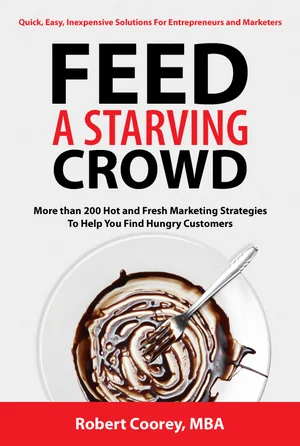
Get Feed a Starving Crowd free
Robert's first book: more than 200 low-cost marketing strategies to find hungry customers. Free PDF and ePub.
Download it freeFrequently asked questions
What subscription business can I start from home with no money?
Service subscriptions are the cheapest to start because you already have the main ingredient: your skill. Monthly bookkeeping, coaching, tutoring, social media management, website care plans, meal planning or a members' community with live sessions can all launch with a template website, a payment link and your time. Avoid anything that needs stock or software development until early revenue can fund it.
How do I fund stock for a subscription box with no money?
Pre-sell. Take orders, or better, annual payments from founding members, before you buy stock, and set a clear first ship date. Start with small batches from suppliers who'll sell you low minimums. Who Gives A Crap funded its first production run through crowdfunding before the product existed. Never take payment for something you can't deliver on the promised date.
Should I quit my job to start a subscription business?
Not until the subscription can cover your essential costs, or you have a clear runway. Many successful founders started on the side. Patrick Campbell gave himself a nine-month experiment. The Food Boss Academy's founder started her journey while working and studying. Set a target, such as monthly recurring revenue equal to six months of your living costs, before you jump.
Is it better to bootstrap or raise money for a subscription business?
Bootstrap if your business can grow from its own revenue, because you keep control and learn to be efficient. Raise money if the opportunity needs heavy upfront investment (software, hardware, stock) or a land grab before competitors arrive. Plenty of subscription businesses never raise. Some reported 2026 fast-growers reached $100 million in annual recurring revenue with little or no outside funding.
How do I find my first subscribers for free?
Start with people who already know you: past customers, your network, local businesses that serve the same customers. Then go where your audience gathers: groups, forums, LinkedIn, local events. Run a free webinar or workshop, ask every early customer for one referral, and write or film something genuinely useful each week. It's slow at first and compounds.

Get both books free
The Subscription Playbook (ebook + audiobook) and Feed a Starving Crowd, instantly. In Australia? Claim the free hardcover.

Robert Coorey, MBA
Robert is the author of The Subscription Playbook and Feed a Starving Crowd and a Director at BPAG Accountants in Sydney. More about Robert.
Sources
- TechCrunch, Paddle acquires ProfitWell for $200M (25 May 2022)
- Kogan.com, FY26 results announcement (24 Aug 2026)
- Unilever, sale of Dollar Shave Club (26 Oct 2023)
- The Guardian, Who Gives a Crap co-founder aims for world domination (27 Jul 2025)
- Lauryn Bryght, coaching website (accessed Oct 2026)
- ATO, Registering for GST
Facts and prices checked 27 October 2026. Spotted something out of date? Tell us.