Joint venture marketing is when two businesses that serve the same customers, but don't compete, promote each other's products to their audiences, usually for a share of the sales. The best partners sell something your customers buy just before, during or just after they buy from you. Pitch each one personally, make the offer easy to promote, and pay well for results.
Key takeaways
- Your best partners sell what your customer buys right before, during or right after your product.
- Personal pitches win. A generic 'Dear partner' email gets deleted.
- Start the commission conversation low and work up, but pay recurring commission on subscriptions if your margins allow.
- Leaderboards, prizes and a custom bonus get partners to actually hit send.
- In 2026 the partner may be a newsletter, podcast, creator or software integration, and you're responsible for what they say about you.
A gold and silver brokerage firm was running newspaper and magazine ads, and doing all right.
Then it hired Jay Abraham.
Jay didn't buy more ads. He made a list of every business that already had a relationship with people who buy gold: financial newsletters, investment magazines, authors of investing books and seminar companies. None of them sold gold. But a big share of their customers did.
He offered each of them a commission to recommend the brokerage. They said yes.
That one strategy brought in $500 million in a year. No paid advertising.
That's joint venture marketing. You borrow the trust another business has already built with your customers, and you pay them only when it works. I wrote a whole chapter on it in Feed a Starving Crowd, and the principles have held up for more than a decade. The tactics have moved, though, so this is the 2026 version.
What is joint venture marketing?
Joint venture (JV) marketing is two non-competing businesses promoting each other to their own audiences. Usually one side pays the other a commission on sales.
The holy grail looks like this: a business with a large, engaged audience, selling something complementary to yours, happy to recommend you, and paid only on results.
It's centuries old. The internet just made it faster to set up and easier to track. There's a spectrum:
| Arrangement | How it works | Best for |
|---|---|---|
| Referral program | Your customers refer friends for a reward | Every subscription business |
| Affiliate program | Anyone approved promotes you for a set commission via a tracked link | Digital products, SaaS, memberships |
| Joint venture | A negotiated deal with one partner: custom offer, shared webinar, bundle | Launches and bigger partners |
| Integration partnership | Your product appears inside theirs (marketplace listing, upsell, bundle) | Software and services that plug together |
Customer referrals get their own page: referral programs for subscription businesses. This one is about partners.
Where do you find joint venture partners?
Look at who your customer deals with just before, during and just after they buy from you.
When I ran an online marketing agency, the "before" list was obvious. Before anyone needs online marketing, they need a website, hosting and a domain name. After they start selling online, they need order fulfillment, shipping, video production and PR. None of those businesses competed with us. All of them made our clients' lives better.
Here's the same exercise for a few subscription businesses (the partners are illustrative):
| Your subscription | Before | During | After |
|---|---|---|---|
| Fixed-fee bookkeeping for tradies | Business brokers, banks, trade associations | Job management software | Equipment finance, insurance brokers |
| Pilates studio membership | Physios, obstetricians, sports stores | Activewear brands | Massage therapists, nutritionists |
| Coffee bean subscription | Espresso machine retailers | Barista courses | Cafe fit-out suppliers |
| B2B SaaS for builders | Architects, drafting services | Accounting software | Project financiers |
In the book I sent you to bookstores, Google Alerts and JV matchmaking sites. The 2026 list is longer:
- Newsletters. Many niche audiences now live in a newsletter. Platforms such as beehiiv run recommendation networks where you set a price per verified subscriber and other publications recommend you. As at October 2026, beehiiv says the publication creating the offer sets its cost per subscriber and beehiiv keeps a 20% fee.
- Podcasts. A podcast host with 3,000 loyal listeners in your niche is worth more than a general audience of 300,000.
- Creators. YouTube, TikTok, Instagram and LinkedIn creators who teach your customers something.
- Communities. Facebook groups, Slack and Discord communities, and industry associations.
- Software marketplaces. If your product connects to Xero, Shopify, HubSpot or similar, their app marketplace is a JV partner that never sleeps.
- Your own suppliers. They already sell to your customers and want you to grow.
Steal this: the 15-minute partner list
Draw three columns: Before, During, After. Write down every business your customers pay in each one. Circle the five with the biggest audiences of your exact customer. Those are your first five pitches.
How do you pitch a partner so they say yes?
Put yourself in their shoes. They have an audience they've spent years building. Every bad recommendation costs them trust.
So what do they want to know? Good partners always ask some version of these:
- Have your results been proven, with real testimonials?
- Does your sales page convert?
- Will you look after the customers I send you?
- Are you here to help my audience, or just to sell?
Have good answers ready before you pick up the phone.
My friend Simone Novello ran a business that set up JVs all day. Her approach template was short and warm: who suggested the call, who your customer is, a small gift so the partner can experience your work, and a request for coffee. That's it.
Her rules for channels still apply. Never send a generic LinkedIn connection request. Reference a mutual connection and the shared target market. Send a short email too. And always follow up with a phone call a week or two later, because they won't call you back.
The 12-minute yes
My favorite JV pitch story is from digital media producer Dom Goucher.
Dom had an idea for an iPhone app. Instead of a thirty-page proposal, he made seven slides with sketches, some numbers and how the deal could be structured. Then he recorded himself talking through them and emailed the link: "I put together a quick video overview of how I think it could work. Buzz me back if you think it's interesting."
The reply came twelve minutes later. "Love the idea. Was blown away by the presentation."
In 2026, that's a three-minute screen recording. It still works because almost nobody bothers. And if you get a no, never send an angry reply. Some partnerships take a few nays before the yay.
How much commission should you offer a partner?
When the book came out, the going rate for digital information products was about 50% (no variable cost), and physical products were usually 10% to 25% because of shipping and handling.
But you don't have to open with your best offer. Business coach Andrew Roberts started his negotiations by offering an iPad in exchange for an email to the partner's list. Plenty of people with good databases aren't marketers and don't know what the going rate is. If they wanted more, he'd move to 10%, then 25%, and only offered 50% to savvy marketers with huge lists.
Subscriptions change the math. A one-off sale has one commission. A subscriber pays you every month, so you can choose between a one-off bounty, commission for 12 months, or commission for the life of the customer.
In The Subscription Playbook I described being on the receiving end of a lifetime deal. My agency was an affiliate for Ontraport and earned 30% of the revenue from every customer we referred, for as long as they stayed. Ontraport later cut that to 25%, and I suspect margins were the reason.
Worked example: bounty or recurring commission?
Say you sell a $49-a-month membership. Gross margin is 80%, and the average member stays 14 months (both illustrative).
- Lifetime revenue per member: $49 × 14 = $686
- Lifetime gross profit: $686 × 80% = $548.80
Option A: a one-off bounty of $100 when the member's first payment clears. You keep $448.80 of gross profit.
Option B: 20% recurring for 12 months. That's $9.80 × 12 = $117.60. You keep $431.20, and the partner is rewarded for sending members who stay.
Option B costs you $17.60 more but pays partners for quality, not just clicks. If your churn is high in the first few months, it also protects you from paying for members who leave early.
Whatever you choose, keep the total cost per customer well below what you'd pay through ads. My pages on customer acquisition cost and the LTV calculator will help you find that ceiling.
Work out what a partner-referred customer is worth
Use the free LTV:CAC and Payback Calculator to set a commission you can afford, before you start negotiating.
How do you get affiliates to actually promote you?
Here's a pitfall nobody warns you about.
The partner agrees to mail their list. Then...silence. You follow up politely. More silence. It's like they've turned into Batman. And you know they're still around because they're emailing everyone else's offers.
This is very common. Partners get cold feet. And you have no stick to wave at them (they're not donkeys), so make the carrot so juicy they'll jump over obstacles to get it.
These four tactics from the book still work:
- A public leaderboard. Top affiliates are competitive. Show them where they rank and they'll fight for first.
- Prizes. EasyVideo Suite's launch offered a $15,000 tour of Turkey and Greece for first place. Eben Pagan offered a $50,000 cash prize to his top affiliate, doubled if they sent all four launch videos.
- Big commissions. Generous splits get attention. Stingy ones get ignored.
- A custom webinar for the partner's audience. This was my main affiliate method for years. One tip from my friend Alexi Neocleous: outside marketing circles, call it an "online seminar." When I heard that, I was thrilled and annoyed at the same time, because I'd wasted so many leads using the wrong word.
If I could only pick one tactic, it would be a custom bonus from the partner. During one big launch, Jeff Walker offered his own audience a one-on-one phone consultation if they bought through him. He hadn't done that in seven years.
Lessons from one of the world's top affiliate managers
For the book I interviewed Dush Ramachandran, a former ClickBank vice president who went on to recruit and manage affiliates for clients. Three of his lessons have aged beautifully:
- Personalize for the big hitters. Their promotional calendars are booked months out. Dush once pitched a diet product to a golf-training affiliate by pointing out that fitter golfers play better golf. It worked.
- Don't forget the small guys. Add up all the smaller partners and they can out-sell the big ones. Keep them engaged with points for every promotion, testimonial or helpful action, not just revenue.
- Think evergreen. Dush placed client offers inside partners' members' areas and post-purchase upsells, so revenue kept flowing after launch week. In 2026 the evergreen version is an integration: your product listed in the partner's marketplace, onboarding flow or bundle.
Bloggers then, creators now
In the book, Australian blogger Fiona Purcell shared three rules for working with "mummy bloggers." Swap "blogger" for "creator" and they're still the best advice I know:
- Have a hook. An intimate lunch with a high-profile guest beats a press release and a gift bag.
- Be personal. Reference something they actually made. Anything starting "Dear Blogger" goes in the bin.
- Make it win-win-win. The creator, their audience and you all need to get something. "Great content" isn't a win.
Relevance beats reach
Travel writer Adam Costa landed fifty guest posts on the same day, including big sites like ProBlogger and Lifehacker. Total referral traffic in the first week: 1,019 visits. Most of the posts were on business sites, about marketing, sending readers to a travel site. Compare Buffer, which grew to 100,000 customers in nine months largely through guest posts in its own niche. Pick partners whose audience is your customer.
How do you protect yourself in a JV?
Some partners don't pay. Some exaggerate what your product does to make a sale. Both have happened to me.
My rules:
- Collect the cash yourself whenever possible, then pay commissions.
- If the partner collects payment, give them a custom product and landing page so there's no argument about who sent what.
- Send "swipe copy" so your product is described accurately.
In 2026, add a fourth: make sure partners disclose the relationship. In the US, the FTC's revised Endorsement Guides (June 2023) say disclosures must be clear and conspicuous, which online means unavoidable, not hidden behind a "more" link. Advertisers can also be liable for deceptive endorsements made on their behalf. In Australia, an ACCC sweep found 81% of 118 influencers reviewed had posts that raised concerns, most often undisclosed brand relationships. The ACCC applies the same advertising rules to posts you pay or incentivize others to make.
If you sell subscriptions in Australia, also remember that the subscription rules starting 1 July 2027 apply to the sign-up flow your partner sends people to. Read Australia's subscription trap laws before you build a partner landing page. This is general information as at October 2026, not legal advice.
When is joint venture marketing the wrong choice?
When you don't have proof yet. Partners won't risk their audience on an offer that hasn't converted. Get your first sales another way, then approach partners with numbers.
When your margins are thin. If you can't afford a meaningful commission, partners won't prioritize you. Fix pricing first.
And when you can't look after the customers. A JV that sends you 500 customers in a week is a disaster if onboarding breaks. A JV multiplies a good offer. It can't fix a weak one.
What to do next
- Write your Before, During, After list today.
- Pick five partners and write five personal pitches. No templates.
- Decide your commission structure using your real lifetime value.
- Build the partner kit: swipe copy, images, a tracked link, FAQs and a custom bonus.
- Ask for one specific date for one specific promotion, then follow up by phone.
For more no-budget ideas, browse 101 low-budget marketing ideas and the four shoestring techniques in growing subscribers on a shoestring budget.
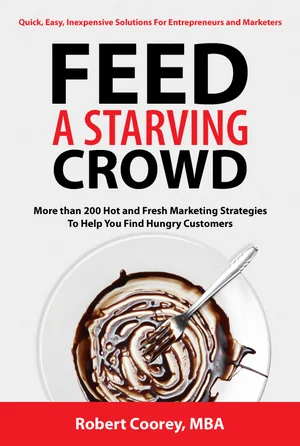
Get Feed a Starving Crowd free
Robert's first book: more than 200 low-cost marketing strategies to find hungry customers. Free PDF and ePub.
Download it freeFrequently asked questions
What's the difference between a joint venture and an affiliate program?
An affiliate program is a standing offer: anyone approved can promote you for a set commission, tracked by a link. A joint venture is a negotiated partnership with a specific business, often with a custom offer, a shared webinar, co-branded content or a bundle. Most businesses run both. The affiliate program catches the long tail, while JVs are where you put personal effort into a handful of big partners.
Does affiliate marketing still work in 2026?
Yes, but the partners have changed. Fewer people run big email lists of 'internet marketing' buyers. More audiences sit with newsletter writers, podcasters, YouTube and TikTok creators, community owners and software platforms with integration marketplaces. The principles haven't changed: find partners whose audience already wants what you sell, make promotion easy, track everything and pay for results.
How do I track joint venture sales without expensive software?
Give each partner a unique landing page, coupon code or tracking link, and ask 'Who referred you?' at sign-up. Most billing platforms support coupon codes, and many subscription tools have affiliate add-ons. A spreadsheet of partner, customer, first payment date and commission owed is enough for your first ten partners.
Should I sign a written agreement with a JV partner?
Yes, even a short one. Cover the commission rate, how long it's paid (one-off, 12 months or lifetime), when it's paid (after the customer's payment clears and any refund period ends), what claims the partner can make, disclosure of the paid relationship, and how either side can end it. In Australia, get advice if the deal involves sharing customer data or equity.
Can a joint venture partner be a competitor?
Sometimes. If you each serve a different segment, region or price point, referring overflow or out-of-scope customers to each other can work well. Two accounting firms with different specialties do this all the time. Be careful with anything that looks like agreeing on prices or carving up customers, which competition law prohibits.

Get both books free
The Subscription Playbook (ebook + audiobook) and Feed a Starving Crowd, instantly. In Australia? Claim the free hardcover.

Robert Coorey, MBA
Robert is the author of The Subscription Playbook and Feed a Starving Crowd and a Director at BPAG Accountants in Sydney. More about Robert.
Sources
- beehiiv Support, FAQs about the Recommendations Network (paid recommendations, accessed Oct 2026)
- Wiggin and Dana, The FTC has revised its Endorsement and Testimonial Guides (June 2023)
- ACCC, Scrutiny of influencers and businesses for misleading advertising and online reviews continues (7 Dec 2023)
- ACCC, Social media promotions
Facts and prices checked 27 October 2026. Spotted something out of date? Tell us.