A customer referral program rewards existing customers for introducing new ones. For subscriptions, the six reward types that work are: one-time cashback (paid after the new customer's first payment), extra features or capacity, a free month, branded swag, ongoing referral fees, and partnerships with associated businesses. Dropbox's storage-for-referrals program is the best-known example.
Key takeaways
- Pay the reward only after the referred customer pays you, as Gusto does.
- Rewards paid in your own product (storage, credits, a free month) cost far less than cash.
- Cap the reward. Dropbox limits referral storage so customers still have a reason to upgrade.
- Ongoing referral fees work, but only if your margins can carry them for the customer's lifetime.
- Referral programs amplify a good product. They can't fix a product customers don't love.
A long time ago I ran a marketing workshop for a group of local dance studio owners.
I asked them to do something simple: write down every business they could think of that was connected to theirs.
The list grew fast. Art schools. Preschools. Swim schools. Shops selling dance shoes and costumes. Every one of them had customers who might want dance lessons.
Then I asked them to do something harder. Call each business and suggest a partnership: we'll refer our families to you, if you refer yours to us.
In no time, the studios had a referral network. It cost nothing to set up.
That's the spirit of a good referral program. You're not buying customers. You're giving the people who already like you a reason and an easy way to tell someone else.
In Chapter Eight of The Subscription Playbook I called referrals my favorite technique for growing client numbers on a shoestring. Here's how to build one.
Why do referral programs work so well for subscriptions?
Because trust transfers. A friend's recommendation does the selling your ads can't.
In the book I cited several studies on this. Nielsen found 84% of people trust word of mouth from friends and family more than marketing messages. Wharton research found referred customers have a 16% higher lifetime value. Deloitte reported referred customers have a 37% higher retention rate. Those studies are a few years old now, but the logic hasn't changed.
For a subscription business, that last point is the big one. Referred customers tend to stay longer, and in a subscription, staying longer is where all the money is.
The six referral reward types (with examples)
1. One-time cashback
Payroll and HR provider Gusto runs a "refer and earn" program. Customers share a link. When the referred business signs up, the referrer gets a cash reward.
Here's the critical part. The reward is triggered when Gusto receives the referred customer's first invoice payment. No payment, no reward. Gusto never pays for a referral that doesn't turn into revenue, and the first invoice is always bigger than the reward.
2. Extra features or capacity
Dropbox gives storage for referrals. As at October 2026, Basic accounts get 500 MB per referral, up to 16 GB. Plus and Professional accounts get 1 GB per referral, up to 32 GB.
I love two things about this. The reward is more of what customers came for, and it costs Dropbox very little. And the cap means customers can't earn so much free space that they never need to pay.
3. A free month
Evernote, when I wrote the book, gave points for successful referrals that customers could trade for a free month or a free year. The catch: to earn a free period, a customer had to refer enough people that their subscriptions paid for it. The points also gave Evernote total control over how much work each reward took.
4. Branded swag
T-shirts, caps, mugs and umbrellas, for brands people are happy to be seen with. Harley-Davidson customers love the logo. Roses Only, the Australian online florist, famously sold quality branded umbrellas below cost. On a rainy day in Sydney, thousands of people were walking advertisements.
The caveat: you need a brand people want on their stuff.
5. Ongoing referral fees
I've been on the receiving end of this one. My marketing agency used Ontraport, a sales and marketing platform, so much that we signed up as an affiliate. For every customer we referred, we received 30% of their revenue for the life of their account. Ontraport later reduced it to 25%.
It became a passive revenue stream for us. But it's expensive for the company paying it, which is probably why the rate came down.
6. Associated businesses
The dance studio exercise. Partner with businesses that serve the same customers but don't compete with you, and refer to each other. A physio and a pilates studio. A bookkeeper and a business banker. A vet and a dog groomer. For more on partnerships, see affiliates, JVs and bloggers.
Which referral reward should you choose?
| Reward type | Cost to you | Best for | Watch out for |
|---|---|---|---|
| One-time cashback | Medium (cash) | B2B and higher-priced plans | Pay only after the new customer pays |
| Extra features or capacity | Low | Software, storage, credit-based products | Cap it so customers still upgrade |
| Free month | Low (your margin for a month) | Most subscriptions | Don't let it train customers to wait for freebies |
| Branded swag | Low to medium | Brands people love to show off | Only works if the brand is desirable |
| Ongoing referral fees | High (a share of every payment) | Partners and affiliates who refer often | Check your margins can carry it for years |
| Associated businesses | Almost free | Local and service businesses | Needs regular contact to stay active |
Work out what a referral is worth to you
Use the free LTV:CAC and Payback Calculator to compare the cost of a referred customer with a paid one, and set a reward you can afford.
The math of a referral reward
Here's how to set a reward you can afford.
A $40-a-month subscription (illustrative)
Your plan is $40 a month with a 70% gross margin, so each month earns you $28 of gross profit. Customers stay 20 months on average, so lifetime gross profit is about $560.
Paid ads currently cost you about $250 to win a customer.
Option A: double-sided free month. The referrer gets a month free and so does the new customer. You give up two months of revenue, but your real cost is about two months of servicing those accounts, roughly $24 at a 70% margin. Even counting the full $80 of forgone revenue, it's under a third of your ad cost.
Option B: ongoing 30% referral fee. 30% of $40 is $12 a month for 20 months: $240, close to your ad cost and nearly half your lifetime gross profit.
Option A wins for customers. Option B is only worth it for partners who send you a steady stream.
Run your own numbers with the LTV calculator, and compare referral cost with your current customer acquisition cost.
How to set up a referral program in seven steps
- Pick a reward that matches your value. More of your product beats cash for most subscriptions.
- Make it double-sided so the friend has a reason to act.
- Trigger the reward after the first payment, not at sign-up.
- Cap it so referrals can't replace paying.
- Make sharing effortless: a personal link, a code and a ready-written message.
- Ask at the right moment: after a win, a renewal or a milestone.
- Track and thank: a spreadsheet is fine to start; send every referrer a personal thank-you.
Built-in referrals: let the product do the sharing
The best referral programs don't feel like programs at all. The product spreads itself every time a customer uses it.
A design made in Canva gets sent to a client. A Calendly link gets clicked by everyone you book a meeting with. 3D-modeling company Meshy puts an attribution license on free users' outputs, so every published model credits Meshy, and paying users get private ownership instead. AI app builder Emergent lets users share and clone each other's apps.
Ask yourself: what does my customer already show other people? An invoice, a report, a booking page, a photo, a finished project? Put your name on it, tastefully, with a way for the viewer to get the same. That's a referral program with no reward to pay. It's a core idea behind product-led growth.
When referral programs don't work
I'll be straight with you about the caveat I put in the book. If you use a referral program, your service must be everything you promise. If you break promises, referred customers will leave faster than you can shake a stick, and they'll take the referrer's goodwill with them.
Three other situations where referrals disappoint:
- Your product is a commodity. Dropbox's referral program is legendary, but paying users have been flat at about 18.2 million for two years as storage became something Google, Microsoft and Apple bundle. Referrals spread a product; they can't make it different. Read how Dropbox's referral rocket hit a ceiling.
- Customers don't talk about what you sell. Nobody brags about their insurance broker at a barbecue. Associated-business partnerships often work better than customer referrals here.
- Your buyers can't accept gifts. Some corporate and government buyers have rules against personal rewards. Offer account credit or a charity donation instead.
And keep referrals separate from reviews. Rewarding customers for recommending you to a friend is fine. Paying for public reviews or testimonials creates a different set of problems, and consumer regulators take a dim view of it.
What to do next
- Make your associated-business list today. Ten names, and call three this week.
- Choose one customer reward from the six types, and make it double-sided.
- Set the trigger and the cap.
- Write the share message your customers will send.
- Add a referral ask to your renewal and milestone emails.
- Measure referred customers' churn rate against everyone else's after six months.
For the other three low-cost growth techniques from the same chapter, read grow subscribers on a shoestring. And for 227 more low-cost marketing strategies, there's my first book.
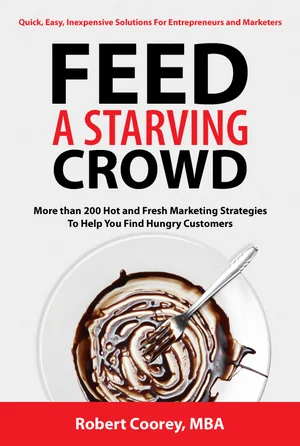
Get Feed a Starving Crowd free
Robert's first book: more than 200 low-cost marketing strategies to find hungry customers. Free PDF and ePub.
Download it freeFrequently asked questions
What is a good referral reward for a subscription business?
One that the customer values highly and costs you little. For most subscriptions that's a free month or extra capacity, because the cost to you is your margin on one month rather than cash. As a rule of thumb, keep the total reward (both sides) well under what you'd pay to acquire a customer through ads, and below one month's gross profit per customer if you're unsure.
Should both the referrer and the new customer get a reward?
Usually, yes. A double-sided reward gives the referrer a reason to share and the friend a reason to act on it. Dropbox gives storage to both people. It also makes the referral feel like a favor rather than a sales pitch, which makes customers more comfortable sharing.
How do I track referrals without special software?
Start simple. Give each customer a unique code or link, ask 'How did you hear about us?' with a referral option at sign-up, and keep a spreadsheet of referrer, new customer, date of first payment and reward sent. Most billing platforms support coupon codes, which can double as referral codes. Upgrade to referral software once volume justifies it.
When is the best time to ask a customer for a referral?
Right after they've had a win: their first result, a renewal, a thank-you email, a five-star review or a milestone like a year as a member. People refer when they feel good about you. Asking during onboarding, before they've seen value, usually falls flat.
What's the difference between a referral program and an affiliate program?
Referral programs reward your customers for recommending you to people they know, usually with credits or one-off rewards. Affiliate programs pay partners, often bloggers, creators or agencies, a commission for sales they send, sometimes for the customer's lifetime. Ontraport's lifetime commission is closer to an affiliate model. Many subscription businesses run both.

Get both books free
The Subscription Playbook (ebook + audiobook) and Feed a Starving Crowd, instantly. In Australia? Claim the free hardcover.

Robert Coorey, MBA
Robert is the author of The Subscription Playbook and Feed a Starving Crowd and a Director at BPAG Accountants in Sydney. More about Robert.
Sources
Facts and prices checked 27 October 2026. Spotted something out of date? Tell us.