A successful crowdfunding campaign is mostly won before launch. Build an email list of likely backers, set a goal that covers your real costs, and launch with a memorable headline, an honest story, a short video and rewards worth having. Push hard in the first 48 hours so the campaign looks like a winner, then keep posting updates until the end.
Key takeaways
- Most of the work happens before launch: list building, a preview and a goal you can hit early.
- Five elements matter most: headline, story, video, rewards and the right social channel.
- Price rewards after fees, manufacturing and shipping, or a 'successful' campaign can lose money.
- Brandon Sanderson's record $41.7 million campaign was effectively a year-long subscription.
- In Australia, crowdfunding money can be taxable, and equity crowdfunding has its own legal regime.
I don't drink coffee liqueur. I don't even like coffee liqueur.
And yet one day, while writing Feed a Starving Crowd, I nearly pledged $50 to a startup making cold drip coffee liqueur.
Why? Because the makers of Mr Black, hoping to raise $10,000 on the Australian crowdfunding site Pozible for their first batch, told a story I felt I had to reward. A story of hard work and perseverance, told honestly.
The next day I got an email. They'd hit their target in thirteen days.
That's crowdfunding in one sentence. People don't fund products. They fund people they believe in, with a story they want to be part of.
What makes a crowdfunding campaign successful?
It isn't posting a half-formed idea, walking away and coming back to find $10,000 in your account.
When I wrote the book, Pozible expert James Lees told me 44% of campaigns on the platform failed "because people don't run their campaigns properly, they don't pitch their campaigns properly, and they're not capturing the goodwill of their potential supporters."
So what do the winners have in common?
How Brian Fargo hit his goal in hours
Brian Fargo is the game producer behind the classic Wasteland. For years he tried to fund new games through traditional backers and got nowhere. But his fans were relentless.
So he turned to them directly. On 6 March 2013, his studio inXile launched a Kickstarter for Torment: Tides of Numenera with a goal of $900,000.
Why $900,000? Brian explained: "We knew what kind of experience we wanted to deliver and we just had to do it for the minimum amount of money."
Before launch he'd posted video updates about the concept and the team. The team released about fifteen minutes of real gameplay so fans could taste what was coming. Fans were tweeting him at 5:30am asking when it would go live.
It cleared the goal within hours and finished with $4,188,927 from 74,405 backers.
Look at what he did right:
- A pre-built crowd. Fans were waiting before day one.
- A preview. Real gameplay, not promises.
- A minimum viable goal. Small enough to hit fast, honest about the real cost.
- Credibility. Decades in the industry, and a gap fans wanted filled.
The five elements backers pay for
From the book, still the checklist I'd use:
- A memorable headline. "Throw trucks with your mind" will stop a scroll. So will a less fictional title with a real hook.
- An engaging story. Who you are, why you started, what you'll do with the money and how you'll succeed. The honesty in Mr Black's video is what nearly got my $50.
- An unforgettable video. Show, don't just tell. Demos, the team, the problem. People decide in the first minute whether they'll back you, so get to the point.
- Rewards worth having. The Do Good Bus, which took volunteers to communities in need, offered backers the chance to get their face on the bus. It raised $100,000 from 680 backers.
- The right social channel. The Do Good Bus team said it took "consistent monitoring, posts on Twitter and Facebook, personal begging emails to friends and support from the band" to get there in time.
In 2026, number five usually means your email list first, then the one or two platforms where your backers already gather: Reddit, Discord, YouTube, Instagram or a niche newsletter. See social media strategies nobody else is doing for how to pick.
Who Gives A Crap: 50 hours on a toilet
In 2012, Simon Griffiths sat on a toilet for 50 hours to crowdfund the first production run of Who Gives A Crap toilet paper, raising about A$50,000. The stunt was the headline, the story and the video all at once. The business became a consumables subscription that donates half its profits to sanitation charities and is now in supermarkets in Australia, the UK and the US. Read the full Who Gives A Crap case study.
Why the biggest Kickstarter ever was really a subscription
In March 2022, fantasy author Brandon Sanderson ran a Kickstarter for four secret novels.
It raised $41,754,153, the most-funded Kickstarter campaign at the time. It passed the previous record, Pebble Time's $20.3 million, within three days.
Look at the reward structure. Backers paid once for four books delivered over 2023, in ebook, audiobook or print. Higher tiers added eight boxes of themed merchandise delivered across the year.
That's a prepaid annual subscription with a box component. Sanderson's fans paid for a year of deliveries before the first one shipped.
This is the lesson for subscription businesses. Crowdfunding is one of the best ways to pre-sell your first year:
- A founding-member year at a launch price.
- The first three boxes of a subscription box.
- Lifetime pricing for the first 100 members (with care, because lifetime deals cap your revenue).
If you'd rather fund a creator business month by month instead of in one burst, that's Patreon's model. See how Patreon passed $10 billion paid to creators.
And publishing is still big on Kickstarter. The platform said its Publishing category raised more than $45 million in 2025.
Test the crowd before you launch
Score your campaign idea with the free Starving Crowd Niche Finder before you spend a dollar on video.
How do you price crowdfunding rewards?
This is where "successful" campaigns lose money. The pledge isn't your revenue.
Worked example: a $79 reward
A specialty tea startup offers a three-month tea subscription box for a $79 pledge (illustrative).
- Platform and payment fees, say 8% to 10% all up: about $7
- Product and packaging for three boxes: $27
- Shipping three boxes domestically: $30
- Failed pledges and a few replacement boxes, say 5%: $4
That leaves about $11 a backer before your time, design, video and GST. Change the shipping to "one box with three months of tea" and the margin jumps. Do this math for every tier before launch, and charge more for international shipping. The Subscription Price Calculator helps you work out a price after costs, GST and fees.
If you're registered for GST, or the campaign pushes your turnover over the A$75,000 threshold, the ATO says you must register and charge GST on taxable sales. My page on GST on subscriptions explains how that affects your price.
How do you promote a Kickstarter campaign?
Before launch:
- Build a list of likely backers. A pre-launch page, a waitlist, your existing customers.
- Show a preview. A prototype, a sample chapter, the first box.
- Line up partners. Newsletters, podcasts and creators who'll mention you in launch week. My joint venture guide shows how to pitch them.
Launch week:
- Hit hard in the first 48 hours. Early momentum makes you look like a winner, and platforms tend to feature projects that are moving.
- Email your list on day one, day two and day three. Most people need more than one reminder.
The middle and the end:
- Post updates and stretch goals. Give people a reason to share again.
- Push the final 48 hours. Remind everyone it's ending.
Money isn't proof
When I wrote the book, I was blown away by Shyp, a parcel-shipping startup. Tim Ferriss emailed his list about it as an AngelList investment, and the $250,000 allocation sold out in 53 minutes. Its investors included the president of PayPal and the founder of Google Earth. Shyp shut down in March 2018. A brilliant raise proves people believe in you. Only customers who keep paying prove the business works.
What Australian founders need to know
As at October 2026, and in general terms only:
Rewards crowdfunding can be taxable. Money you raise for a business or profit-making project is generally treated as income, and if you're registered for GST, rewards you supply can carry GST. Keep records of every pledge, fee and cost.
Equity crowdfunding is different. Australia's crowd-sourced funding regime lets eligible companies raise money from the public in exchange for shares, but only through an intermediary licensed by ASIC, such as Birchal or Equitise, and within annual limits on how much a company can raise and how much each retail investor can put in. Check the current rules on ASIC's website and get advice before you start.
Consumer law applies. Backers who pay for a reward are customers, so the Australian Consumer Law's rules against misleading claims cover what you promise and when you say it will arrive.
Free Subscription Profit Review

Australian business owners can book a free 30-minute review with a BPAG Accountants adviser. An honest conversation about:
- whether a subscription model could work for your business
- how recurring revenue could cover your fixed costs each month
- how it could lift what your business is worth
No cost, no obligation. General information only until we understand your situation.
When is crowdfunding the wrong choice?
When you have no crowd. With no list, community or audience, you're relying on strangers finding you on the platform, and few do.
When your margins can't carry the fees and shipping. Some products are better pre-sold from your own website.
When you need the money for runway rather than for delivering rewards. Crowdfunding funds a product. It doesn't fund a company's salaries for a year.
What to do next
- Write your headline and story in one paragraph. If it doesn't excite a friend, keep rewriting.
- Build a pre-launch list. Aim to have enough subscribers that converting a fraction of them would hit your goal on day one.
- Cost every reward tier properly, including fees and shipping.
- Record a short, honest video.
- Book partners and email dates for launch week.
For more ways to get your first customers without a budget, read unusual ways to launch fast and cheap and starting a subscription business with no money.
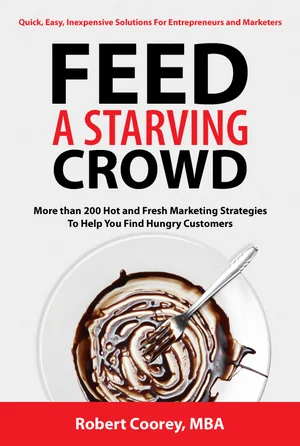
Get Feed a Starving Crowd free
Robert's first book: more than 200 low-cost marketing strategies to find hungry customers. Free PDF and ePub.
Download it freeFrequently asked questions
Which crowdfunding platform should I use?
Match the platform to the project. Kickstarter suits creative and product projects with a fixed goal. Indiegogo offers more flexible funding options. Pozible is Australian and popular for local creative and community projects. Patreon is ongoing support for creators rather than a one-off campaign. For equity, Australian companies use ASIC-licensed crowd-sourced funding intermediaries such as Birchal or Equitise.
How much should my crowdfunding goal be?
The minimum that lets you deliver every reward, after platform and payment fees, manufacturing, shipping, packaging, tax and a contingency for mistakes. A lower goal you hit in the first day or two usually raises more than a high one, because backers like joining a winner. Brian Fargo set his goal at the minimum needed to make the game he'd promised.
How long should a crowdfunding campaign run?
Around 30 days is common. Longer campaigns rarely raise more, because pledges cluster at the start and the end. A shorter, intense campaign with a pre-built list often beats a long, quiet one. Plan specific announcements, stretch goals or partner promotions for the middle week, when momentum usually dips.
Can I crowdfund a subscription business?
Yes. Sell the first period of the subscription as the reward: a founding-member year, the first three boxes, or lifetime pricing for early backers. It proves demand, funds the first production run and gives you a cohort of members to learn from. Be clear about when delivery starts and what happens after the crowdfunded period ends.
What happens if my campaign doesn't reach its goal?
On all-or-nothing platforms like Kickstarter, backers aren't charged and you receive nothing. That protects you from having to deliver on too little money. Treat a failed campaign as market research: look at where visitors dropped off, what backers asked, and whether your list was big enough. Many successful campaigns are relaunches.

Get both books free
The Subscription Playbook (ebook + audiobook) and Feed a Starving Crowd, instantly. In Australia? Claim the free hardcover.

Robert Coorey, MBA
Robert is the author of The Subscription Playbook and Feed a Starving Crowd and a Director at BPAG Accountants in Sydney. More about Robert.
Sources
- CNBC, Fantasy author's record-breaking Kickstarter campaign closes at $41.7 million (31 Mar 2022)
- Engadget, Brandon Sanderson's record-breaking Kickstarter campaign ends with $41.7 million
- Kickstarter, A year in review: 2025 Kickstarter highlights
- The Guardian, Who Gives a Crap co-founder aims for 'world domination' (27 Jul 2025)
- Wikipedia, Shyp (shut down March 2018, accessed Oct 2026)
- Wikipedia, Equity crowdfunding (Australian regime and first licensed intermediaries, accessed Oct 2026)
- ATO, Registering for GST
Facts and prices checked 27 October 2026. Spotted something out of date? Tell us.