Social media works for small businesses when you pick one or two platforms where your customers already spend time, post emotionally charged, positive and useful content in the format that platform rewards, and give people a clear next step, such as joining your email list or claiming a trial. Measure leads and sales, not likes. Consistency beats volume.
Key takeaways
- Positive, emotionally charged content gets shared most. That finding from 2012 still holds.
- StumbleUpon closed in 2018 and SlideShare left LinkedIn in 2020. Their 2026 equivalents are short video, carousels, Reddit and newsletters.
- LinkedIn is still the best cold-outreach tool for reaching hard-to-reach people, if every message is personal.
- Treat social as search. People search TikTok, YouTube, Reddit and AI assistants for answers.
- For subscriptions, social is as much a retention channel as an acquisition one.
In November 2012, my colleagues and I started a Facebook page called Punnky. It stood for Positive Uplifting News Network.
We had no idea if it would work. We just wanted to put some positive energy into the world, one story and one quote a day.
Within two months it passed 100,000 fans and reached 6 million people.
Then, on 16 September 2013, we posted a screenshot of a personal note written in the iPhone Notes app. In a few days it had more than 100,000 likes and 22,000 shares.
We didn't get lucky. Angela Yeow, who ran the page, had tested fifteen different content styles and themes and tracked which ones people shared. And the winning post ticked two boxes that researchers had just identified.
That's the thing about social media. It changes constantly, but the psychology underneath barely moves.
When I wrote Chapter 7 of Feed a Starving Crowd, I said: "Social sells." I still believe it. But two of the platforms in that chapter no longer exist in the same form, so here's the updated version.
Does social media marketing still work for small businesses?
Yes. But not the way most people do it.
Most small businesses post when they remember, about whatever's on their mind, and measure likes. Then they decide social "doesn't work."
The businesses that make money from social do three things differently:
- They go where their starving crowd already is, not where everyone says they should be.
- They post things people want to share or save.
- They give every post a job: a lead, a sale, a member kept.
If you're not sure who your crowd is yet, start with the starving crowd principle. Picking a platform before you know your customer is like choosing a shop location before you know what you sell.
What makes a post go viral?
In 2012, Jonah Berger and Katherine Milkman at Wharton published a study of about 7,000 New York Times articles to see which ones readers emailed to each other most.
They found two things:
- Emotion. Content that triggers a strong emotion, like awe, amusement or anger, gets shared more than calm content.
- Positivity. All else equal, positive content beats negative content.
Our Punnky post had both. It looked like a private message (curiosity), it was moving (emotion), and it was uplifting (positive). Angela's testing also found a winning caption format: one line of description, then "Share if you agree," then a reason to follow the page.
The 2026 lesson: emotion and positivity still travel, but each platform now rewards different signals. Saves and shares matter more than likes on most platforms, and how long people watch matters most on video.
Raw beats polished
I was once asked by the media how small businesses can take on big brands on social. My answer hasn't changed. If a small business is raw and real, it can run circles around faceless corporate giants. Whenever I look at my own feed, the more open and vulnerable the post, the higher the engagement.
What changed since 2013 (and what replaced it)?
Here's the honest scorecard for Chapter 7:
| 2013 tactic | What happened | 2026 equivalent |
|---|---|---|
| Facebook "photo stack" album | Organic page reach collapsed | Carousel posts on Instagram and LinkedIn that people save |
| StumbleUpon paid discovery | Shut down in June 2018 | Reddit ads, TikTok and Instagram boosted posts, newsletter recommendations |
| SlideShare decks | LinkedIn sold it to Scribd in 2020 | LinkedIn document (PDF) carousels |
| Pinterest boards for female audiences | Still works for visual, planning-led niches | Pinterest plus YouTube Shorts and TikTok, which people now use as search engines |
| Dell's Twitter coupons | Twitter became X in 2023 | Broadcast channels, SMS and email for members-only deals |
| Reddit AMA | Still works | Reddit AMAs, plus Reddit threads showing up in Google and AI answers |
Pinterest and Reddit made it through. StumbleUpon and SlideShare didn't. The principles did.
How do you use LinkedIn to reach people who won't take your call?
This one hasn't aged at all.
When I was writing Feed a Starving Crowd, I had to reach dozens of people I'd never met to interview them. I went through LinkedIn for every one. Most were happy to help.
Here's how:
- Fix your profile first. When someone gets your request, the first thing they do is read your profile. Make it complete, with recommendations and proof.
- Write a custom note for every person. Mine was two sentences: I'm writing a book about creative marketing campaigns and I'd like to include a case study from your company. Does this interest you?
- Move fast. Once connected, book a call straight away. Get 'em while they're hot.
- Do it yourself. I never delegated this to an assistant. People can tell.
It works whether you're selling, recruiting a joint venture partner, or asking an expert for advice.
In 2026 add one thing: post before you pitch. If your last ten posts are useful to the person you're contacting, your request lands as a familiar name, not a stranger.
Is Reddit worth it for a small business?
For the right niche, very much so. I'll admit I didn't love Reddit's design when I wrote the book (and I said so, knowing I'd be eaten alive if I posted that on Reddit itself). But the audience is huge, curious and switched on. Reddit went public in March 2024 and reports well over 100 million daily active users.
The examples from the book still teach the right lessons:
- DuckDuckGo ran a simple Reddit ad for thirteen days. It cost $650 and brought 20,700 clicks, about 3 cents each. Founder Gabriel Weinberg said the key was that Redditors actually tried the product, and their 656 comments told him what to fix.
- A Hebrew teacher posted a free coupon for his Udemy course and got 500 enrollments in under two days. Free students made the course look popular, which helped paid sales.
- A beef jerky store spotted a thread complaining about the price of jerky and offered a Reddit-only discount code.
Two things are different in 2026. First, Reddit threads now rank prominently in Google, and Reddit licenses its data to AI companies including OpenAI. A helpful answer in the right subreddit can keep sending customers for years. Second, Redditors are even quicker to spot marketing dressed up as a "genuine" post. Be open about who you are, follow each subreddit's rules, and add more than you take.
Steal this: the complaint search
Search Reddit for "[your category] expensive", "[your category] alternative" and "[your competitor] cancel". Every complaint thread is a list of what your starving crowd wants. Answer helpfully, mention your offer only where the rules allow, and note the exact words people use for your landing page. Paste the threads into the Customer Pain-Point Analyser to group the complaints.
Find the crowd before you pick the platform
Score your niche ideas with the free Starving Crowd Niche Finder, then go where that crowd already hangs out.
How do you make short video work without a production budget?
The wikiHow story from Chapter 7 is the best guide I know to short video, even though it was about Pinterest.
wikiHow went from zero to about 46,000 Pinterest followers by doing three things: visually appealing posts, topics that fit its audience, and high-quality content to click through to. It also leaned into seasonal topics and cross-promoted Pinterest everywhere else.
That's exactly how how-to content works on TikTok, Reels and YouTube Shorts today. People type questions into those apps the way they used to type them into Google.
So:
- Answer one real question per video. "How much does a dental membership cost?" beats "Meet the team."
- Hook in the first two seconds. Show the result first, then how.
- Plan around seasons. Tax time, back to school, the new year, Christmas.
- Give one next step. Your free guide, your trial, your booking page.
How do subscription businesses use social media differently?
A one-off seller needs social to find new buyers. A subscription business needs it to keep the ones it has.
I made this point in The Subscription Playbook with LiveAgent and Airbase, which both run communities (on Facebook and Slack) that keep members engaged and bring in new ones. I go through those in growing subscribers on a shoestring budget.
A few ways to use social for retention:
- Members-only content. A private group, broadcast channel or live session that only subscribers can join.
- Members as the content. Share member wins (with permission). Sephora built its most-followed Pinterest boards from staff "It Lists" of favorite products, which is exactly what a subscription box curator should be posting.
- Listening for churn. Complaints and "how do I cancel" questions on social are early warnings. My customer retention strategies cover what to do next.
What are the rules for Australian businesses?
Three to know, as at October 2026:
- You're responsible for your page. The ACCC says businesses are responsible for false or misleading comments and posts others make on their social media pages. Set posting rules, block people who break them, and remove misleading posts.
- Paid posts are ads. The ACCC applies the same advertising rules to posts you pay or incentivize influencers to make.
- Under-16s are off most platforms. Australia's social media minimum age took effect on 10 December 2025. Platforms including Facebook, Instagram, TikTok, Snapchat, YouTube and Reddit must take reasonable steps to stop under-16s holding accounts. If you sell to teenagers, your social strategy now has to reach parents.
This is general information, not legal advice.
When is social media the wrong channel?
When your customers aren't there in a buying frame of mind. A commercial cleaning company might get more from LinkedIn outreach and Google than from TikTok.
When you can't commit. Three months of posting followed by silence looks worse than never starting.
And when you're using it to avoid harder work. If your offer, pricing or landing page is weak, more posts won't fix it. There are 101 other low-budget marketing ideas to try first.
What to do next
- Pick one main platform where your customers ask questions about your problem.
- List twenty questions your customers ask you. Each one is a post or a video.
- Test at least three content styles for a month, like Angela did, and keep the winner.
- Give every post a single next step, ideally onto your email list.
- Send ten personal LinkedIn notes a week to partners, prospects or experts.
Then, when a post starts working, put a small budget behind it. My guide to Facebook and Instagram ads on a small budget shows you how.
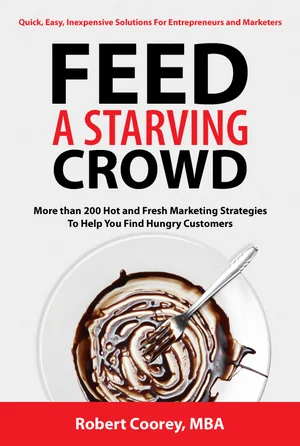
Get Feed a Starving Crowd free
Robert's first book: more than 200 low-cost marketing strategies to find hungry customers. Free PDF and ePub.
Download it freeFrequently asked questions
Which social media platform is best for a small business?
The one your customers use when they're thinking about your problem. Trades, clinics and cafes often do best on Instagram, Facebook and Google reviews. B2B services and accountants do best on LinkedIn. Products with a visual story suit TikTok, Instagram and Pinterest. Niche hobbies and tech audiences live on Reddit and YouTube. Start with one, get it working, then add a second.
How often should a small business post on social media?
As often as you can keep the quality up. For most owners that's two to four good posts a week on one main platform, plus replying to every comment and message. A consistent, sustainable rhythm beats a burst of daily posting that stops after three weeks.
Should I pay for social media ads or stick to organic posts?
Use both, in that order. Organic posts tell you which messages resonate for free. Then put a small budget behind the posts that already perform. My guide to Facebook ads on a small budget shows how to work out what you can afford to pay for a customer.
Can a small business still grow on Facebook organically?
It's much harder than in 2013, when a page could reach most of its fans for free. Facebook groups, Messenger, events and local community pages still work, and for many local businesses Facebook remains where customers ask for recommendations. Treat your page as a shopfront and your group or email list as the relationship.
Is it OK to use AI to write social media posts?
Yes, as a drafting tool. Use it to turn a long article into ten post ideas, suggest hooks or tidy captions. But the posts that spread are personal, specific and a bit raw, and generic AI copy is easy to spot. Add your own story, numbers and opinion to every post, and never use AI to invent testimonials or reviews.

Get both books free
The Subscription Playbook (ebook + audiobook) and Feed a Starving Crowd, instantly. In Australia? Claim the free hardcover.

Robert Coorey, MBA
Robert is the author of The Subscription Playbook and Feed a Starving Crowd and a Director at BPAG Accountants in Sydney. More about Robert.
Sources
- ACCC, Social media promotions (business responsibility for posts and comments)
- Wikipedia, StumbleUpon (shut down June 2018, accessed Oct 2026)
- Wikipedia, SlideShare (sold to Scribd, 2020, accessed Oct 2026)
- Wikipedia, Reddit (IPO, OpenAI data deal, daily active users, accessed Oct 2026)
- Wikipedia, Online Safety Amendment (Social Media Minimum Age) Act 2024 (accessed Oct 2026)
Facts and prices checked 27 October 2026. Spotted something out of date? Tell us.