On a small budget, start by working out the most you can pay for a customer from your margins and customer lifetime value. Run one campaign, one broad audience and three to five simple video or image ads, optimized for an event cheap enough that Meta gets about 50 results a week. Kill losers after a fair test, and put more behind the winners.
Key takeaways
- Your maximum cost per customer comes from your margins and lifetime value, not from what others spend.
- Meta's algorithm needs roughly 50 results a week to learn. Pick a goal your budget can reach.
- On a small budget, creative is your targeting. Test ads, not audiences.
- Cheap, homemade video often beats polished video. Orabrush and Blendtec proved it.
- Free trials that roll into paid plans face new rules in Australia from 1 July 2027.
My first ever marketing campaign was an ad in the Yellow Pages for my DJ business.
The sales rep told me it would cost $1,000.
Gulp.
I was charging $250 a gig. So I did the math: four gigs from the ad and I'd get my money back. Anything after that was profit.
I wrote a headline, "We play the music you want to hear," paid my money and waited. The first call came in right after the ad went to press. My calendar was completely blank, but I told the caller October was a busy month. (I couldn't sound too available, could I?)
That little sum on the back of an envelope is still the most important thing I know about paid advertising. It's how you should approach Facebook and Instagram ads in 2026, especially on a small budget.
Know what a customer is worth. Know how many you need to break even. Then spend.
How much should a small business spend on Facebook ads?
Don't start with a budget. Start with the most you can afford to pay for one customer.
For a one-off sale, that's your gross profit on the sale. For a subscription, it's your gross profit over the customer's lifetime, which is why subscription businesses can usually outbid one-off sellers for the same customer.
Maximum cost per customer = (Monthly price × Gross margin × Average months retained) ÷ 3
Dividing by three is a common safety margin. It keeps your LTV:CAC ratio around 3:1, so there's money left for overheads and profit.
Worked example: a pilates studio membership
An Australian studio sells an unlimited membership for A$189 a month (illustrative). After instructor costs, rent share and payment fees, gross margin is 55%, and members stay an average of 9 months.
- Lifetime gross profit: A$189 × 55% × 9 = A$935.55
- Maximum cost per member at 3:1: about A$312
Now work backwards. If 1 in 4 people who book a free intro class become members, the studio can pay up to about A$78 per booked intro class. If it's paying A$25, it should spend more, not less.
Do this sum before you open Ads Manager. Most owners who say "Facebook doesn't work" were never told what a good result looked like. Run your own numbers in the LTV:CAC and Payback Calculator.
What's the minimum budget for Facebook ads?
Technically, you can run ads for a few dollars a day. Practically, the useful minimum depends on what you ask Meta to optimize for.
Meta's system learns by watching results. An ad set needs roughly 50 of its chosen results in a week to finish what Meta calls the learning phase. Until then, delivery is unstable and costs bounce around.
So:
Practical daily budget ≈ (Expected cost per result × 50) ÷ 7
| Optimizing for | Example cost per result | Daily budget to exit learning |
|---|---|---|
| Purchases at $60 each | $60 | about $430 |
| Free trial sign-ups at $20 | $20 | about $143 |
| Leads at $8 | $8 | about $57 |
| Landing page views at $0.50 | $0.50 | about $4 |
These costs are illustrative. Yours will vary by industry, country and offer.
If you can't afford the budget for your real goal, you have three options:
- Optimize for a cheaper action higher up the funnel, such as a lead or a free class booking, and follow up with email.
- Consolidate. One campaign with one ad set gets to 50 results faster than five ad sets with a fifth of the budget each.
- Run longer. Accept a slower test rather than spreading money thin.
How do you set up a small-budget campaign in 2026?
When I wrote the book, the game was detailed targeting: interests, ages, lookalikes. In 2026, Meta pushes most advertisers toward its automated Advantage+ campaigns, where broad targeting and Meta's AI decide who sees each ad.
That changes the job. On a small budget, your creative is your targeting. An ad that speaks to new mums finds new mums, even with a broad audience.
Here's the setup I'd use:
- Install the Meta pixel and conversions API so Meta can see real results.
- One campaign, one objective (leads or sales).
- One ad set with a broad audience in your service area.
- Three to five ads that each test a different idea, not a different color.
- A landing page built for that one offer. My guide to landing pages that convert covers what goes on it.
- Leave it alone for at least a week, then cut the worst and add a new idea.
Steal this: send ads to content first
Years ago, my team filled events for one of the world's top public speakers. Our usual approach was ads straight to the event page. We tested sending ads to his blog posts instead, each ending with a call to register. After three weeks of tweaking, the blog posts converted better. People arrived already agreeing with his message. Try it with a useful article or video before your offer.
What kind of ads work on a small budget?
Cheap and real, usually. Chapter 8 was full of proof.
Orabrush made a tongue cleaner that had failed in retail for eight years. Research showed 92% of people wouldn't buy it online. So the company made a homemade YouTube video for the other 8%, starring a guy in a lab coat and giant goggles. It went on to sell about 2.3 million brushes and got into major retailers.
Blendtec's marketing director had a $100 budget. He bought supplies and filmed the CEO blending things that shouldn't be blended. "Will It Blend?" passed 100 million views and retail sales were reported up 700%.
Dollar Shave Club's launch video cost about $5,000. Within 48 hours, some 12,000 people had signed up for the subscription. That company later sold to Unilever, and in 2023 Unilever sold a majority stake to private equity firm Nexus Capital. The video is still a masterclass in a founder selling to camera.
Greg the Gardener, a Brisbane gardener, built a following teaching people things like how to remove a tree stump, with a big smile and an Aussie accent.
The 2026 versions of those ads are vertical videos for Reels and Stories:
- The founder or a staff member to camera, explaining one problem.
- A customer showing a result (with permission, and never scripted to say something untrue).
- A quick demo of the product doing its job.
- A "before and after" or "what's in this month's box."
Know your maximum cost per customer
Use the free LTV:CAC and Payback Calculator to find out what you can afford to pay Meta for each new subscriber.
Do Facebook competitions still work?
Yes, if the prize attracts your customer and nobody else.
At E-Web we once offered a prize of more than $56,000 of online marketing services. We spent $1,854 on ads and got over 3 million impressions, 4,009 clicks and 216 entries, which was $8.58 per lead. For a services business, that's a great result, because every entrant was a business wanting marketing help.
Burberry's "Art of the Trench" asked customers to submit photos of themselves in their Burberry coats. In the year after launch, e-commerce sales grew 50%. The prize was the customer's fifteen minutes of fame.
Compare that with giving away an iPad. Everyone wants an iPad, so you get a list of people who want free things.
Three rules for 2026:
- Follow Meta's promotion rules. You can't require people to share on their personal timeline or tag friends to enter.
- Check trade promotion laws. In Australia, some states and territories require permits for games of chance. A game of skill ("tell us in 25 words or less") is simpler.
- Don't mislead. The ACCC holds businesses responsible for misleading posts and comments on their own pages.
The forced continuity problem
Here's a tactic from the book that I questioned even in 2013.
Fitness trainer Mike Chang built a huge YouTube following and ran ads to a sales funnel. After you bought his course, you were automatically enrolled in a coaching program with a 14-day free trial. If you didn't cancel, you paid $97 a month for five months.
The industry calls that "forced continuity." I wrote that I'd prefer a checkbox letting people opt in. My worry was that buyers would think, "It's going to be a real hassle to cancel this."
In 2026 it's more than a conversion question. Australia's new subscription rules, which start on 1 July 2027, require clear disclosure of key terms before sign-up, notices during the subscription and an easy way to cancel. In the US, the FTC's "click to cancel" rule was struck down in court, but regulators still pursue the same conduct. See Australia's subscription trap laws and what happened to click-to-cancel.
If your ads lead to a free trial, make the price and renewal date impossible to miss. It's the law soon, and honest trials convert into members who stay.
When are Facebook ads the wrong choice?
When you haven't proven the offer. Ads amplify what's already working. Sell to ten customers by hand first.
When your lifetime value is tiny. If a customer is worth $15 of gross profit, you'll struggle to buy them for less.
When your customers are searching, not scrolling. Emergency plumbers and tax agents in March usually do better with Google search ads and reviews.
And when you can't follow up. Leads from social ads go cold in hours. If nobody calls them back today, save your money.
What to do next
- Calculate your maximum cost per customer with the formula above.
- Pick an optimization goal your budget can reach about 50 times a week.
- Shoot five phone videos, each testing a different message.
- Run one campaign for a week without touching it.
- Keep the winner, kill the rest, and add two new ideas every week.
Want more no-budget options before you spend? See social media strategies nobody else is doing and the five-step video sales letter formula.
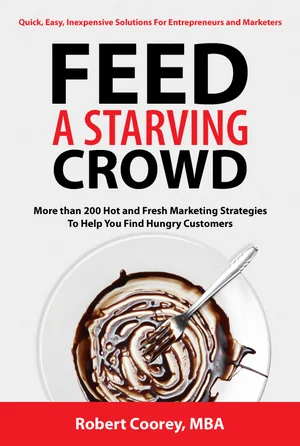
Get Feed a Starving Crowd free
Robert's first book: more than 200 low-cost marketing strategies to find hungry customers. Free PDF and ePub.
Download it freeFrequently asked questions
What is a good daily budget for Facebook ads for a small business?
Work backwards from your goal. Multiply the cost of one result (a lead, a trial or a sale) by about 50, then divide by seven. If leads cost you $10, that's roughly $70 a day to give Meta enough data to learn. If that's too much, optimize for a cheaper action like landing page views or link clicks while you test, and accept that results will be less predictable.
How long should I run a Facebook ad before judging it?
Give each ad enough spend to get a meaningful number of results, not just a few days. A practical rule is to let an ad spend at least two to three times your target cost per result before you turn it off. Avoid editing the campaign every day, because significant changes can restart Meta's learning phase.
Should I boost posts or use Ads Manager?
Boosting is fine for quick reach on a post that's already doing well organically. For sales and leads, use Ads Manager, because it lets you choose the objective, track conversions with the Meta pixel and conversions API, and compare ads properly. Many small businesses boost a winning organic post first, then rebuild it as a proper conversion ad.
Are Instagram ads different from Facebook ads?
They're bought through the same Meta system, and by default your ads can show on both, plus Messenger. The difference is format: Instagram and Reels reward vertical video and strong visuals in the first second. Let Meta place ads across placements at first, then check the breakdown to see where your customers actually convert.
Do I need a professional video for Facebook ads?
No. Phone-shot video of the owner, a customer or the product in use often performs better than polished ads because it looks like normal content in the feed. Spend your money on testing more ideas, not on one expensive video. Upgrade production only once a simple version has proven the message.

Get both books free
The Subscription Playbook (ebook + audiobook) and Feed a Starving Crowd, instantly. In Australia? Claim the free hardcover.

Robert Coorey, MBA
Robert is the author of The Subscription Playbook and Feed a Starving Crowd and a Director at BPAG Accountants in Sydney. More about Robert.
Sources
- Unilever, Unilever announces the sale of Dollar Shave Club (26 Oct 2023)
- ACCC, Social media promotions
- Competition and Consumer Amendment (Unfair Trading Practices) Act 2026, Federal Register of Legislation
Facts and prices checked 27 October 2026. Spotted something out of date? Tell us.