A video sales letter (VSL) is a sales letter turned into a video: simple slides or a talking presenter reading persuasive copy that leads to an offer. The classic five steps are a pattern-interrupting hook, rapport, the big problem, the bigger solution and the grand offer. Start with a cheap text-on-slides version, test it against your sales page, and upgrade only what wins.
Key takeaways
- A VSL is copy first, video second. Most of the work is the script.
- Follow the five steps: hook, rapport, problem, solution, offer.
- The first ten slides decide whether anyone watches the rest. Test them hardest.
- Start ugly. Upgrade to whiteboard, animation or an AI presenter only after the basic version converts.
- Browsers block autoplay with sound, and subscription offers must show price and renewal terms clearly.
Jon Benson never wanted to be a copywriter. He wanted to be a musician.
Instead, he was a kid from Brooklyn with degrees in philosophy and music, a failed online business behind him, and YouTube videos that took days to make and sold maybe ten copies of his fitness product.
One Saturday night, sitting in his boxer shorts watching his team play, he was reading a psychology book. It said people pay more attention when they read and listen at the same time.
So he opened PowerPoint. Big black words on a white background. He highlighted the trigger words, read the script aloud over the slides, and emailed the video to his list.
Then he made it longer, eighteen minutes, and split-tested it against his text sales page. By his account, it converted at 6.1 percent.
That "ugly" video became the template for the video sales letter. When I interviewed Jon for Feed a Starving Crowd, his VSL strategies had generated more than $1 billion in sales for his clients.
Many would call it ugly marketing. But ugly doesn't mean ineffective.
What is a video sales letter?
A video sales letter (VSL) is a long-form sales letter delivered as a video. In its simplest form it's slides with text and a voiceover reading the text. Fancier versions use a whiteboard, animation, a doodle style or a presenter talking to camera.
Why does it work so well?
- It's easier than reading. People who skim a sales page will watch a video word by word, the way they followed along when a parent read them a bedtime story.
- There's no clutter. One idea per slide, nothing else to click.
- It controls the order. You decide when they hear the problem, the story and the price.
In the book I quoted copywriter Harlan Kilstein: "Agora Publishing has chosen the butt ugly video over the butt ugly sales letter. It's made them a few hundred million dollars."
The 5-step VSL formula
Here's Jon's flow, with examples from The Truth About Abs, one of the most successful fitness VSLs of its era. Its creator, Mike Geary, was reported to sell over $1 million a month of a single $47 product.
Step 1: The snap hook (pattern interrupt)
People arrive distracted. You have a few seconds to stop their train of thought.
Jon told me the best testing results come from playing with the first ten slides. In The Truth About Abs, the first frame was messy handwriting and a hand-drawn sketch. It was so unpolished you had to see what came next.
Step 2: Rapport
We buy from people we relate to. This is where the "reluctant hero" lives: I'm not that different from you.
"Hi, I'm Jon. I'm not a naturally lean guy; in fact, I was downright obese for many, many years."
Cheesy? A little. Formulaic? Definitely. And yet people are glued, because they want to believe the turnaround can happen to them.
Step 3: The big problem
Show that the problem is bigger than they thought. In my corporate sales days I was taught a see-saw: pain on one side, buyer resistance on the other. The stronger the pain, the lower the resistance.
The abs VSL tells a story about a locker room in seventh grade, years of crunches and a sore back, and feeling "like a prisoner in my own body."
Step 4: The bigger solution
If you build pain without a solution, nobody believes a solution exists. Explain why the usual fixes fail and what works instead. In the abs example: training your abs directly just builds muscle under the fat.
Step 5: The grand offer
Now introduce the product, the expert behind it and the proof. Then the price, the guarantee and the call to action.
Steal this: the 5-step outline for a subscription
Hook: "Most cafe owners lose money on their best customers." Rapport: Your own story of the slow month that nearly broke you. Problem: Regulars spread visits thin, cash flow lurches, and loyalty cards don't change behavior. Solution: A coffee subscription that turns regulars into members who pay up front. Offer: Your setup package, price, what's included and how cancellation works. Then fill in the details with the VSL script template.
How long should a video sales letter be?
As long as it takes to make the sale, and no longer.
Jon's breakthrough version ran eighteen minutes. The Foundation, a software training business I wrote about in the same book, got a 40% opt-in rate from an eight-minute video, after its founders spent a hundred hours on the script.
A useful way to decide:
| Situation | Typical length | Why |
|---|---|---|
| Low price, familiar problem (a $29 a month app) | 2 to 6 minutes | Little to explain, low risk |
| Mid price, new idea (a $47 course, a membership) | 8 to 20 minutes | Must reframe the problem first |
| High ticket or B2B (consulting, annual plans) | 15 to 45 minutes, or a webinar | More objections, the offer is often a call |
| Warm audience (existing customers, referrals) | Shorter | Trust is already there |
These are starting points, not rules. Your video host's drop-off chart will tell you the truth. Wherever most people leave, rewrite that section.
Write your VSL script tonight
Grab the free VSL script template, fill in the five steps, and record your first version this week.
Which VSL tricks still work in 2026?
The book listed Jon's tips. Here's how each has aged.
Start ugly. Still the best advice. A whiteboard video used to cost up to $1,000 a minute, and it can lift or lower conversions. Get the ugly version converting, then test the upgrade.
Read it yourself. Still true. Your own voice builds rapport, and honest imperfections help.
Call it a "free presentation," not a "free video." Still true. "Presentation" signals stand-alone value.
Hide the player controls. Mixed. Removing the scrub bar can improve completion, but it frustrates people and some will just leave. A middle path: show progress without allowing skipping on the first view, and offer a text version for people who prefer to read.
Autoplay converts better than click to play. Outdated. Since 2018, Chrome has allowed muted autoplay but blocks autoplay with sound until the visitor has interacted with the site. Other browsers behave similarly. Design for it: start muted, burn in captions, and show a clear "click for sound" button.
Show the buy button only when the pitch starts. Still fine, as long as the price and terms are clear once it appears.
What does a VSL cost to make in 2026?
Far less than in 2013. A slide deck, a decent microphone and your phone still do the job. AI tools make captioning, editing and translation cheap.
As at October 2026, entry-level paid plans for some popular tools were:
| Tool | Entry paid plan | Useful for |
|---|---|---|
| Descript | $24 a month (billed monthly) | Editing video by editing the transcript |
| ElevenLabs | $6 a month | Voiceovers and translations |
| Synthesia | $19 a month (billed monthly) | AI presenter videos |
| HeyGen | $29 a month (billed monthly) | AI avatars and translated versions |
Prices change often, so check each vendor's pricing page.
One caution. An AI avatar can read your script, but it can't be your customer. Never present an AI-generated person as a real client, and never invent results.
How do you keep a VSL honest?
The VSL has a reputation problem, and some of it is deserved: fake countdown timers, invented scarcity, "doctors" who don't exist, and trials that quietly turn into monthly charges.
You don't need any of that. Use real stories, real numbers, real deadlines and a guarantee you honor.
For subscription offers, be extra careful. Australia's subscription rules, starting 1 July 2027, require businesses to disclose key terms before sign-up, send notices during the subscription and make cancelling easy. If your VSL ends in a trial or membership, say the price, the billing frequency and how to cancel on the page. See Australia's subscription trap laws and landing pages for subscription offers. This is general information, not legal advice.
Persuasion isn't the problem
I've watched a lot of VSLs. The good ones tell a true story well. The bad ones lie quickly. The structure is the same. The difference is whether you'd be happy for your customer to read your script out loud to a friend.
When is a VSL the wrong format?
When your buyer is in research mode and wants to compare. Software buyers often want a pricing page, a demo and a free trial, not a twenty-minute story. Give them a clear pricing page and a short demo instead.
When the price is tiny and the decision is obvious. Nobody needs a VSL for a $5 add-on.
And when you haven't written the copy. A VSL is a sales letter first. If you can't make the letter work, video won't save it. My guide to copy that makes people buy is the place to start.
What to do next
- Write your script using the five steps. Spend most of your time on the first ten slides.
- Read it aloud to three people who match your customer. Watch for the moment their eyes glaze, then rewrite it. (The Foundation's founders did exactly this.)
- Record the ugly version: slides plus your voice.
- Split-test it against your current sales page with the same traffic.
- Check the drop-off chart every week and fix the biggest leak.
Want feedback before real customers see it? Test the offer on AI personas with the Synthetic Customer Panel.
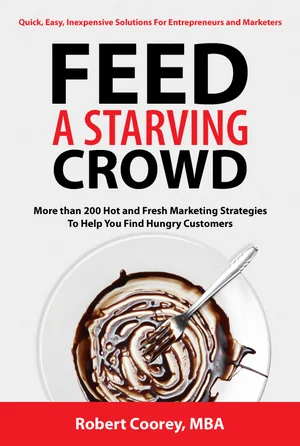
Get Feed a Starving Crowd free
Robert's first book: more than 200 low-cost marketing strategies to find hungry customers. Free PDF and ePub.
Download it freeFrequently asked questions
What's the difference between a VSL and a regular explainer video?
An explainer video tells people what a product does, usually in one to two minutes. A VSL is built to make a sale. It follows a persuasion structure (hook, rapport, problem, solution, offer), deals with objections, and ends with a clear call to action and price. Explainers suit the top of your funnel. VSLs suit a dedicated sales page for people who are already interested.
Can I use an AI avatar or AI voice for my VSL?
You can, and the tools are cheap. But be honest about it. Don't present an AI avatar as a real customer or doctor, and never generate fake testimonials. A founder reading the script in their own voice usually builds more trust, which was Jon Benson's advice too. AI tools are great for drafting, captioning, translating and cleaning up audio.
Should a VSL show the price?
Yes, by the end. The classic tactic is to reveal the buy button only when the pitch begins, so people don't skip ahead to the price. That's fine. Hiding the price or the renewal terms until checkout is not, especially for subscriptions. In Australia, rules starting 1 July 2027 require key subscription terms to be disclosed before sign-up.
Do VSLs work for B2B or high-ticket services?
Yes, but usually as a booking tool, not a buy button. For a consulting package or a B2B subscription, the VSL's offer is a call, demo or assessment. Keep the five steps, use real client stories, and replace the 'buy now' with 'book a time.' Many service firms use a VSL as the page they send people to after a webinar or referral.
Where should I host my VSL?
On your own sales page, using a video host that lets you control the player, add captions and see where viewers drop off. Use YouTube for discovery content that points to the VSL, but avoid sending paid traffic to a YouTube page full of other people's videos. Check drop-off data weekly and rewrite the section where most people leave.

Get both books free
The Subscription Playbook (ebook + audiobook) and Feed a Starving Crowd, instantly. In Australia? Claim the free hardcover.

Robert Coorey, MBA
Robert is the author of The Subscription Playbook and Feed a Starving Crowd and a Director at BPAG Accountants in Sydney. More about Robert.
Sources
- Chrome for Developers, Autoplay policy in Chrome
- HeyGen pricing (accessed 27 Oct 2026)
- Synthesia pricing (accessed 27 Oct 2026)
- ElevenLabs pricing (accessed 27 Oct 2026)
- Descript pricing (accessed 27 Oct 2026)
- Competition and Consumer Amendment (Unfair Trading Practices) Act 2026, Federal Register of Legislation
Facts and prices checked 27 October 2026. Spotted something out of date? Tell us.