A good book launch strategy starts about twelve weeks out. Build an advance reader team, open pre-orders, line up podcasts and partners, and create a reason to buy on launch day, such as a bonus. Then concentrate promotion into launch week so the book ranks, and put calls to action inside the book so every reader can join your list.
Key takeaways
- Start twelve weeks out. Most launch results are decided before launch day.
- Pre-orders and launch-week sales count most, so concentrate your promotion.
- A podcast tour and partner emails usually beat paid ads for nonfiction.
- Give people a reason to buy now, like a launch-week bonus.
- Treat the book as the front door to your business, with calls to action throughout.
A few years ago I sat down with an author who had a deal with a major publisher, to help plan the book's launch.
The publisher had it all mapped out. Pre-sales would open on 1 October through an Australian online bookseller, and the book would hit bookstores on 1 November. A PR firm would handle press after that. Seven or eight podcasts were lined up for November.
Then I asked my first question: "What does success look like?"
The answer: sell as many as possible, have readers tell their friends and be inspired, and open doors to new opportunities.
Good answer. But notice something. Almost everything in the plan started after the book came out. By then, most of a launch is already decided.
So we brainstormed what to add before launch day. That list became the backbone of the plan on this page.
What is a book launch strategy?
It's your plan for concentrating attention and sales around release, so the book gets noticed by readers, retailers, bookstores and the media, and then keeps selling.
A good one has three phases:
- Before launch: build the audience, the team and the pre-orders.
- Launch week: concentrate every promotion into a short window.
- After launch: keep the book working, and turn readers into a list.
If your main goal is the Amazon bestseller label, read how to become an Amazon bestseller alongside this. This page is the wider plan.
The book launch ideas list
Here's what we added to the plan, straight from my notes:
- A book launch party for the author's network and the people who could spread the word.
- A bonus for buying on launch day. Readers send their receipt and get something valuable from the author's businesses and partners: a voucher, a live online workshop with the author, surplus stock from suppliers. A no-brainer.
- A launch team and a "Dream 100" list of people and businesses whose audiences matched the book's readers.
- Digital marketing and retargeting to people who'd visited the book page.
- Testimonials and endorsements gathered before launch.
- Influencer mailers. The book, express posted in a striking box with a small, on-theme gift, designed to be photographed and shared.
- A book landing page and a video trailer.
And two questions I'd ask any author: Is this global or Australia only? And do you want to do this with guerrilla marketing only, or also invest in ads?
What does it take to make the big lists?
In my notes I wrote down the rough rule of thumb we were working with at the time: around 10,000 pre-ordered and first-week sales for the New York Times list, and around 3,000 in a week for the Wall Street Journal list. Treat those as folklore, not facts. Neither list publishes a threshold, and the New York Times list isn't a simple count of total sales. What matters is that both reward concentrated sales in a single week.
The 12-week book launch timeline
| When | What to do |
|---|---|
| 12 weeks out | Finalize title, cover and subtitle. Build the book landing page with an email sign-up. Start your Dream 100 list. |
| 10 weeks out | Recruit the launch team. Aim for two to three times the number you need, because many won't act. Pitch podcasts and media. |
| 8 weeks out | Open pre-orders. Announce a pre-order bonus. Send advance copies to the launch team and reviewers. |
| 6 weeks out | Confirm partner email dates for launch week. Record the trailer. Prepare excerpts, graphics and swipe copy. |
| 4 weeks out | Post influencer mailers. Publish a sample chapter. Start retargeting ads to page visitors. |
| 2 weeks out | Run the hype campaign: two weeks of build-up emails and posts. Brief the launch team on launch-day timing. |
| Launch week | Launch party. Launch-day bonus. Partner emails staggered through the day. Ask the launch team for honest reviews. |
| 1 to 4 weeks after | Podcast episodes go live. Share reader stories. Thank the team. Pitch the next round of media using your early results. |
Most of the result comes from rows one to six. Launch week is when you collect.
How Tim Ferriss launched by building trust first
The 4-Hour Workweek was rejected by twenty-five publishers before Random House said yes.
Then Tim spent his launch budget going to tech conferences to meet the bloggers who wrote for his exact audience, and built genuine friendships with them. "People don't care how good your idea is," he said. "People want to know if they can trust you."
By the time I wrote Feed a Starving Crowd, the book had sold over 1,350,000 copies and been translated into thirty-five languages.
For The 4-Hour Chef, he went further. He released the first chapter and 680MB of behind-the-scenes content on BitTorrent, the file-sharing network. It was downloaded more than 2 million times. Nearly 294,000 people clicked through to the trailer on YouTube, about 328,000 to his website and 880,000 to the book's Amazon page.
He gave the book away to sell the book.
The 2026 version of bloggers is podcast hosts, newsletter writers and creators. The principle is the same: build relationships with the people your readers already trust, months before you need them. My joint venture guide shows how to pitch them.
See how a book can work for a business
Australian business owners can claim a free hardcover of The Subscription Playbook. Everyone can download the ebooks and audiobook free.
How a blog tour sold a million books
John Kremer, author of 1001 Ways to Market Your Books, coined the term "BlogPalooza" after watching novelist Amanda Hocking run a blog event she called a "Zombiepalooza."
Before it, Amanda was selling 3,000 to 5,000 ebooks a month. She invited other authors to guest post on her site and offer their books. They brought their fans, who discovered her books. Within two months, she sold 100,000 copies in December and 450,000 in January. By March 2011, her sales had passed a million and she'd sold the rights to four books to St. Martin's Press for $2 million.
The 2026 version is a group promotion: a handful of authors in the same genre or field each offer something and promote the bundle to their lists in the same week. Everyone's audience grows.
Why I'm happy when people pirate my book
Years after Feed a Starving Crowd came out, Google kept alerting me that it had been pirated on another site. Even in other languages.
I wasn't upset. The torrent sites were doing free marketing for me. And because the book is full of links to a free resources page, many of the people who downloaded it came back to my site and joined my email list.
That's the lesson I'd pass on to every nonfiction author. Two tips from Patrick Snow, author of Creating Your Own Destiny:
- Make every chapter heading a lesson. Your table of contents is your sales page.
- Put calls to action throughout the book to checklists, templates and extra content on your website. There's no point selling a million copies if you don't build a list.
How a book becomes a subscription business's front door
I want The Subscription Playbook to do more than sell copies.
This site turns its chapters into free tools and templates. Australian business owners can claim a free hardcover, and anyone can download the ebooks and the audiobook free. The book is the start of a relationship, not the end of a transaction.
You can do the same with any business. A book can be the first step into a membership, a course, a community, a consulting retainer or a software trial. Book of the Month Club built a 100-year subscription business on books (read how it turned 100), and crowdfunding now lets authors sell a year of books up front.
What should you avoid in a book launch?
- Buying fake reviews or paying for positive ones. The FTC's 2024 rule bans it in the US, and Australian consumer law prohibits misleading reviews.
- Spreading launch sales thin. Rankings weigh recent sales most heavily.
- Leaving the launch team unmanaged. Appoint one person to keep in touch with them.
- Hype without substance. A weak book plus a big launch equals a lot of bad reviews.
When is a big launch the wrong approach?
When the book's real job is to support a business with a small, specific audience. A book that 500 of exactly the right buyers read can be worth more than a bestseller. In that case, skip the national tour and put copies in the right hands. A product launch mindset still helps, but the measure is conversations, not rank.
What to do next
- Write down what success looks like, in numbers.
- Count back twelve weeks from launch day and fill in the timeline above.
- Start your Dream 100 list today.
- Design a launch-day bonus worth more than the book.
- Add three calls to action inside the book before it goes to print.
Then plan your posts and partners with social media strategies nobody else is doing.
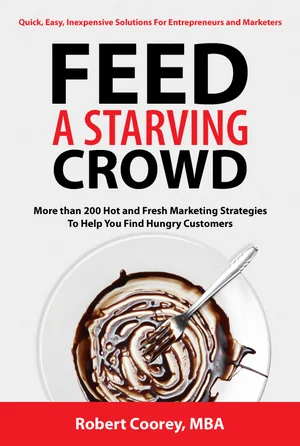
Get Feed a Starving Crowd free
Robert's first book: more than 200 low-cost marketing strategies to find hungry customers. Free PDF and ePub.
Download it freeFrequently asked questions
How much does a book launch cost?
It can cost very little. The highest-value activities, such as a launch team, podcast interviews, partner emails and posts to your own list, mostly cost time. Spend money where it multiplies those efforts: a professional cover, editing, advance copies to post out, and a modest ad budget to retarget people who've visited your book page. Many authors overspend on publicity that doesn't sell books.
When should I start promoting my book?
Start building your list and relationships as soon as you start writing. Begin public promotion about twelve weeks before launch, open pre-orders as early as your publisher or platform allows, and save your biggest push for launch week. Keep promoting for at least a month afterwards, because podcast episodes and reviews keep arriving.
Do pre-orders matter for a book launch?
Yes. Pre-orders tell retailers and bookstores there's demand, and on many platforms they're counted when the book is released, which helps launch-week rankings. They also give you an early read on whether your marketing is working. Offer a pre-order bonus to reward people for not waiting.
Should I self-publish or use a publisher for my book launch?
A traditional publisher brings distribution into bookstores, editing and some publicity, but you'll still do most of the marketing. Self-publishing gives you control, faster timing and more margin per copy, but you organize everything yourself. Either way, the launch plan on this page applies, because readers come from your audience and partners, not from the publisher's logo.
How do I get my book into bookstores in Australia?
Through a publisher or distributor with relationships with Australian booksellers, or by approaching independent stores directly with a local angle and a launch event. Bookstores want proof of demand, so pre-order numbers, media bookings and an author event all help. Australian print sales are tracked by Nielsen BookScan, which bookstores and media watch closely.

Get both books free
The Subscription Playbook (ebook + audiobook) and Feed a Starving Crowd, instantly. In Australia? Claim the free hardcover.

Robert Coorey, MBA
Robert is the author of The Subscription Playbook and Feed a Starving Crowd and a Director at BPAG Accountants in Sydney. More about Robert.
Sources
- Amazon KDP Help, Sales ranking
- FTC, Final rule banning fake reviews and testimonials (14 Aug 2024)
- Kickstarter, A year in review: 2025 Kickstarter highlights (Publishing category)
Facts and prices checked 27 October 2026. Spotted something out of date? Tell us.